


Your fare may be cheap, but the check-in decision rarely is. Low-cost airlines often make fast boarding calls when your onward proof looks weak, unclear, or disconnected from your trip. That matters because you can be stopped before immigration ever reviews your plans, especially on one-way bookings, self-transfer routes, and destinations where staff expect a clean exit story.
We need to think like the airline, not just the border officer. In this guide, you’ll sort out when budget carriers tend to check onward travel, which booking patterns raise suspicion, and what kind of proof gives you the best chance of a smooth check-in. Before a budget-airline check-in, keep a verifiable dummy ticket booking ready for your onward-proof gap.
Table of Contents:
Why Budget Airlines May Care More About Your Onward Proof Than You Expect
Where Low-Cost Airlines Usually Enforce Onward Ticket Rules — And Where Travelers Misjudge The Risk
What Kind Of Onward Proof Actually Reassures A Low-Cost Airline At The Counter
How To Decide Whether To Risk It, Buy Backup Proof, Or Fix Your Plan Before Travel Day
Board With Proof, Not Assumptions
Why Budget Airlines May Care More About Your Onward Proof Than You Expect
A low fare does not mean a relaxed document check. In many cases, budget airlines look at onward proof with a more cautious mindset than travelers expect, especially when your booking pattern already looks harder to defend at the counter.
The Rule Is Not Really About Politeness — It Is About Airline Liability
Low-cost airlines are not checking onward proof to be difficult. They are protecting themselves from the cost of carrying a passenger who may be refused entry and sent back.
That risk matters at the airline level, not just at the border. If a destination requires proof of onward travel, the airline may be expected to confirm that you appear travel-ready before boarding. Once you land, it is too late for the carrier to fix a weak file.
For budget airlines, that calculation is even sharper. Their model depends on tight margins, quick turnarounds, and fewer disruptions. A passenger problem at check-in is easier for them to stop than a return-liability problem after arrival.
So when a desk agent asks for onward proof, the real question is often simple: Can this passenger be carried without creating extra risk for the airline? If the answer is not clear right away, a low-cost carrier may choose the safer option for itself, not the more generous option for you.
Low-Cost Carriers Often Use Tighter Frontline Rules Than Full-Service Airlines
Full-service airlines sometimes have more room for staff judgment. Budget airlines often do not.
Many low-cost carriers run on standardized processes. Staff may be outsourced. Counters may be busy. The agent may be following a short checklist with limited discretion. That makes borderline cases harder to explain away.
If your onward plan needs a long verbal explanation, you are already in a weaker position. A budget airline desk is built for speed and clarity. It is not designed for a debate about why your exit plan is valid in principle.
That is why travelers are sometimes surprised by how firm the answer feels. The issue may not be that your trip is impossible. The issue may be that your proof is not simple enough for a frontline agent to approve quickly and confidently.
One-Way Tickets, Cheap Fares, And Short-Haul Hops Can Trigger More Questions
A one-way booking is not automatically a problem. But it does change how your file looks in a fast document check.
Airlines notice patterns. Certain combinations create more questions because they suggest an unfinished or flexible exit plan. Common triggers include:
A one-way entry flight with no visible onward segment
A long intended stay paired with a very light itinerary
A self-transfer plan that depends on separate tickets
A last-minute booking into a destination known for onward checks
A route where travelers often arrive with loosely planned exits
The fare itself is not the issue. The pattern is.
A cheap one-way ticket on a budget carrier can look less like a normal round-trip journey and more like an incomplete file waiting to become the airline’s problem. That is why low-cost airlines may ask questions even when you feel your broader travel plan makes sense.
Use DummyFlights.com for instant, verifiable dummy flight reservations tailored for visa and airline checks. Readers of Remote Tribe get $5 off with coupon code REMOTETRIBE — simply enter it at checkout for transparent $15 pricing (reduced to $10 with the discount), full PNR details, PDF download, unlimited date changes, and worldwide acceptance.
Some Routes Create More Carrier Anxiety Than Others
Enforcement is not uniform across every destination. Some routes make airlines more cautious because the chance of document trouble is higher, or because staff have seen similar cases go badly before.
This tends to happen on routes where travelers often enter as tourists, rely on visa-on-arrival, or build onward travel later. Island destinations, regional backpacker corridors, and popular hub-to-leisure routes often attract closer review.
A traveler departing from Delhi on a one-way budget flight to Southeast Asia may discover this the hard way. The entry rules may look manageable online, but the airline may still want a clean onward file before check-in is cleared.
That does not mean every such route is high risk. It means route history shapes airline behavior more than many travelers realize.
Why “Nobody Asked Me Last Time” Is Bad Planning
Past experience is one of the weakest ways to judge onward-ticket risk. The same route can feel easy on one trip and strict on the next.
Why? Because enforcement changes with:
The airport
The shift
The agent
The airline’s internal guidance
The exact destination setup on that day
Your booking pattern on that specific trip
A traveler who boarded smoothly once may assume the rule is never enforced. Then the next trip involves a different counter team, a one-way segment, or a tighter review, and the outcome changes immediately.
Where Low-Cost Airlines Usually Enforce Onward Ticket Rules — And Where Travelers Misjudge The Risk
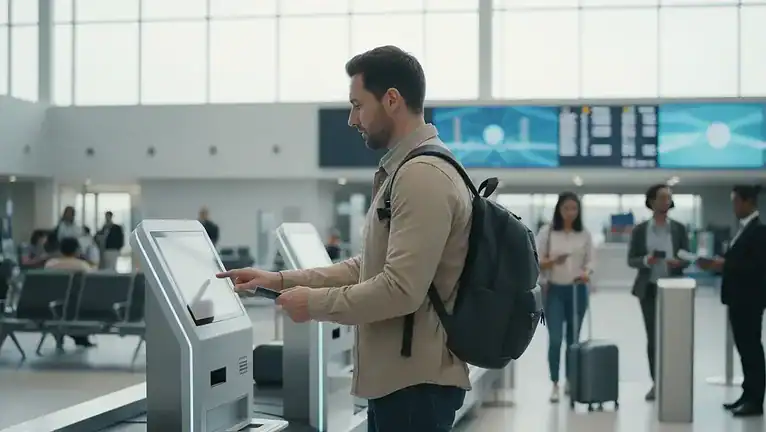
https://www.remotetribe.life/tools/proof-onward-travel-dummy-flight-tickets-2026/The biggest mistake is assuming onward proof gets checked in one place only. With low-cost airlines, scrutiny can appear at several points, and the first serious problem often starts before you are anywhere near immigration.
The First Check May Happen Before You Reach The Airport
Many travelers treat online check-in as a green light. That can be a costly assumption.
Some low-cost airlines use online check-in to filter bookings that need manual review. You may see a generic message asking you to check in at the airport desk. You may be unable to generate a boarding pass. You may get a partial check-in, but still be flagged for document verification.
That does not always mean something is wrong with your onward plan. But it does mean the airline wants a human to look at your file.
This matters because travelers often read too much into digital convenience. A mobile app is designed to move standard cases quickly. Once your booking falls outside that clean path, the airline may push the decision back to a desk agent who has to assess your travel readiness in real time.
If your onward proof is not ready, easy to access, and consistent with your route, the pressure starts early. You are no longer just managing your trip. You are responding to a file that the airline already considers worth checking more closely.
Check-In Counter Conversations Are Usually More Important Than Immigration Desks
The check-in counter is where low-cost airlines often make their real decision.
At immigration, an officer decides whether you meet entry conditions. At the airline desk, the carrier decides whether it is willing to transport you at all. That difference matters. Immigration can question you after arrival. The airline can stop the trip before it starts.
This is why the desk can be stricter than travelers expect. The agent is not trying to interpret every legal nuance of your destination. They are trying to decide whether your documents look strong enough for the airline to accept the carriage risk.
That puts you in a practical, not theoretical, situation. Even if you believe your destination rules allow flexibility, the airline may still want a visible onward booking because the airline needs comfort, not just possibility.
Once that conversation starts, timing matters. Busy counters reward clear answers. If the agent asks for onward proof, a quick and organized response helps. A long explanation about what you plan to book later usually does not.
Bag Drop, Document Check, And Boarding Gate Reviews Are Not The Same Thing
Travelers often treat airport checks as one single event. In reality, low-cost airlines may split them across separate moments.
You might face:
A document review before a boarding pass is issued
A bag-drop check where the staff confirm travel eligibility again
A secondary document desk after the initial counter interaction
A final boarding gate review on routes with tighter compliance patterns
Each stage serves a different purpose.
The first review may be about whether the airline can complete check-in. Bag drop may look routine, but staff can still stop the process if the file shows an unresolved note. A gate review can happen because the airline wants one last check before boarding starts, especially when earlier screening was rushed.
This layered process is where many travelers misjudge the risk. They assume that once one staff member has looked at the booking, the matter is closed. That is not always true. A later team may revisit the same question if the route, destination, or file notes call for it.
With low-cost carriers, you should think of onward proof as something that may need to survive more than one glance.
Self-Transfer Itineraries Make Onward Proof More Important, Not Less
A self-transfer plan often feels logical to the traveler. You may have an entry ticket on one airline and a later exit segment on another. On paper, the overall trip looks complete.
At the counter, that logic can weaken.
Low-cost airlines usually assess the segment they are operating in. If your onward travel sits on a separate booking, especially on another carrier, the check-in staff may not treat it as a seamless continuation. They may see a stand-alone arrival into a country that expects onward proof, followed by an unrelated booking outside their system.
That creates friction in two ways.
First, separate tickets are harder to review quickly. Second, they push more responsibility onto you. If the onward segment fails, changes, or cannot be confirmed easily, the first airline may feel exposed.
So a self-transfer does not reduce the need for clear proof. It often raises the standard. The more disconnected your itinerary appears from the airline’s point of view, the more important it becomes to show clear, accessible onward evidence that is easy to match to your trip.
Transit, Visa-Free Entry, And Visa-On-Arrival Still Do Not Guarantee Smooth Boarding
Travelers often confuse flexible entry rules with flexible airline behavior. They are not the same thing.
A destination may allow visa-free entry for your passport. It may offer a visa-on-arrival. It may have transit scenarios that look forgiving on official rule summaries. Even then, a low-cost airline can still ask to see how you plan to leave.
Why? Because the carrier is not only reacting to the rule on paper. It is also reacting to common passenger patterns, route risk, and how easily the check-in staff can defend the decision to board you.
That is why travelers get caught off guard on routes they thought were simple. They prepared for border control, but the airline had its own comfort threshold.
The harshest onward-proof decision often happens in the least patient setting.
A crowded low-cost counter moves fast. Staff are dealing with queues, baggage issues, passport questions, and timing pressure. In that environment, weak proof suffers. Documents that require explanation, searching, or interpretation are less likely to work in your favor.
What Kind Of Onward Proof Actually Reassures A Low-Cost Airline At The Counter
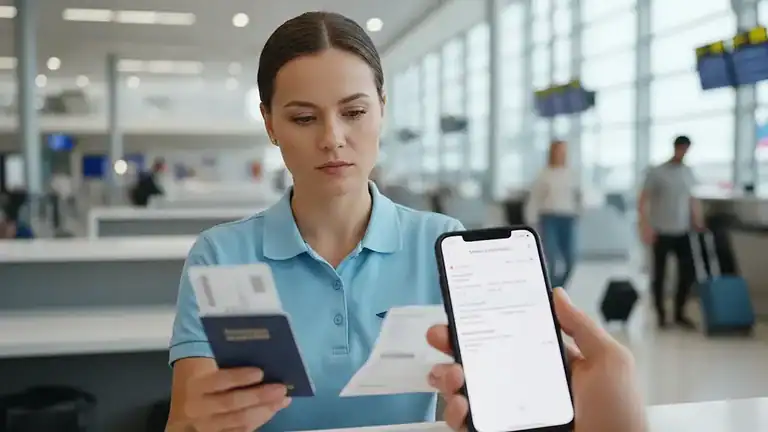
Once a low-cost carrier decides to review your file, the quality of your onward proof matters more than the story behind it. What works best is not the most expensive option. It is the proof that looks clear, consistent, and easy for staff to trust in seconds.
Not All “Proof” Looks Equally Convincing In A Two-Minute Review
At the counter, airline staff do not have time to study a long story. They want a document that quickly shows how you will leave the destination country and when that exit is meant to happen.
That is why some documents feel stronger right away. A proper onward travel ticket with your name, route, and departure date is easier to accept than a vague screenshot or a half-loaded email. The goal is instant clarity.
The strongest first impression usually comes from proof that shows:
Your full name
A realistic onward flight or return flight
A visible booking confirmation
A readable flight number
A route that matches your trip logic
A weak file often fails on speed, not legality. If staff have to guess whether your plane ticket is real, connected, or current, the check can turn against you fast.
A Verifiable Flight Reservation Usually Carries More Weight Than A Screenshot Alone
A screenshot can help, but it rarely does the full job on its own. At a busy check-in desk, staff want something that looks like valid proof, not just a cropped image pulled from your gallery.
A verifiable air ticket or confirmed ticket gives the agent more comfort because it looks structured and complete. It shows that your onward journey is not just a plan you intend to sort out later. It gives the airline something concrete to rely on before boarding you.
This is especially important if you are flying one way. A one-way flight into a country with an onward requirement will usually face more scrutiny than a round-trip booking. In that setting, a clear onward travel proof matters more than a verbal explanation about how you plan to travel onwards to a third country or a neighboring country.
A bus ticket or train ticket can sometimes support the story, but for many airlines, flight-based proof is easier to assess quickly. That is not because land travel is always invalid. It is because many airlines are more comfortable with documents that they can interpret without hesitation.
Timing Matters — Proof That Is Technically Valid But Poorly Timed Can Still Look Weak
Even a clean-looking document can fail if the timing makes little sense.
Staff notice whether your return date lines up with the visa requirements, the length of stay, and the entry requirements of the place you are entering. If you hold a tourist visa but your exit booking falls too far outside the expected window, that mismatch can raise avoidable questions.
The same happens when the route looks rushed or disconnected. An onward flight from the wrong city, a strange transit country, or exact dates that do not match the rest of your bookings can make the reservation feel improvised.
Your proof looks stronger when the timeline feels natural:
Arrival airport and exit point make sense together
The onward requirement is met within the likely stay period
The departure date does not clash with hotel or internal travel plans
The route to the next country looks practical
Low-cost carriers are not doing a full visa application review. But they do notice when the timing looks too messy to defend.
The Best Onward Document Is The One That Matches The Story You Are Telling
A good document does not work in isolation. It works because it matches everything else around it.
If you say you will spend ten days in Costa Rica, then an onward flight leaving within that window feels coherent. If you say you will enter the European Schengen Zone for a short stay, then the exit booking should reflect that plan clearly. If you say you are continuing to a new country after a short break, the route should not look random.
This is where travelers get into trouble with cheap proof. A booking bought for a few bucks can still help if it reads clearly and fits the trip. But cheap proof that looks disconnected from the rest of the file can do more harm than good.
The airline is not asking for your personal experience, your bank statements, or a long explanation about sufficient funds unless the wider file already looks shaky. The cleaner your onward document looks, the less room there is for extra questioning.
What Makes Agents Pause: Editable PDFs, Broken Details, And Over-Explaining
Certain things create doubt immediately. A fake ticket, a broken PDF, missing names, mismatched dates, or a ticket showing obvious edits will make the file harder to trust.
So will a long story at the counter. If the agent asks you to provide proof and you answer with three different plans, the problem grows. The document should speak before you need to.
Weak presentation often looks like this:
An onward travel ticket with no clear booking reference
A refundable ticket that has already been canceled
A return ticket from a city you never reach
A cheap ticket held together by inconsistent details
A document that looks different from a normal airline confirmation
That is also why many airlines react badly to proof that feels assembled at the last minute. They are trying to avoid denied boarding disputes, denied entry costs, and return at your own expense if immigration authorities refuse the trip later.
How To Decide Whether To Risk It, Buy Backup Proof, Or Fix Your Plan Before Travel Day
By this point, the real question is no longer whether low-cost airlines can be strict. It is whether your exact trip is the kind of trip that should be left to chance.
Start With A Simple Risk Test Before You Leave For The Airport
Start with the route, not your confidence.
A low-cost airline looks more closely when the trip has several moving parts. That usually means a one-way entry, a separate onward segment, a destination known for tighter checks, or a travel pattern that looks unfinished at first glance. Many countries require proof of onward travel more often than travelers assume, and countries require different levels of clarity depending on the route and carrier.
Ask yourself four practical questions:
Does your exit plan exist in a form you can show instantly?
Does the departure timing match your stated stay?
Does the route make sense without a long explanation?
Would a rushed agent accept it in under a minute?
If one of those answers is weak, the risk is already higher.
Do not rely on what might happen later at passport control, with immigration officials, or with border patrol after landing. The airline makes its boarding call before any of that matters. Even a traveler holding a us passport can be stopped at check-in if the carrier is not comfortable with the onward plan.
The route matters too. Flights into Southeast Asia, island destinations, and leisure-heavy corridors often get a closer look because staff have seen more cases where onward documents were missing, vague, or inconsistent.
When “I’ll Explain It At The Counter” Is Usually The Wrong Strategy
A desk agent is not grading your intentions. The agent is deciding whether your file is easy to approve.
That is why explanation rarely beats preparation. A long verbal story about how you plan to sort out the next country later does not help much when airline staff are working through a queue. If your booking already looks loose, talking more usually makes it look looser.
Forum threads often make this worse. One traveler says nobody asked. Another says immigration officers were relaxed. Someone else shares great advice based on one trip taken a few months ago. None of that changes the file in front of the airline that day.
You are in a weaker position when your plan depends on phrases like:
“We will buy the onward ticket after arrival”.
“We are still deciding between other countries”.
“We may continue overland”.
“We saw online that more countries are flexible now”.
Those statements may be true. They still do not give the airline a document it can rely on.
The wrong strategy is not just arguing. It is assuming the airline must think the way you do. A budget carrier is focused on carriage risk, denied boarding disputes, and avoiding any suggestion that it enabled a weak entry file that could turn into a denied-arrival problem tied to illegal immigration concerns.
When Paying For Backup Proof Is Cheaper Than Missing Boarding
Sometimes the smartest move is not to debate the risk. It is to reduce it.
That is especially true when your trip has more than one pressure point. You may be entering on a one-way booking. You may be connecting to a separate ticket. You may be heading somewhere that checks onward travel more consistently. In those cases, backup proof can cost far less than a missed flight, hotel loss, or same-day rebooking.
When you need a clean fallback, a service like DummyFlights.com can make sense because it offers instantly verifiable reservations, a PNR with a PDF, unlimited date changes, transparent pricing at $15 (~₹1,300), worldwide visa use, and credit card payment.
When Backup Proof Is Not Enough Because The Real Problem Is Your Itinerary
Sometimes, the document is not the main weakness. The trip design is.
If your route looks confused, stronger proof will not fully fix it. The airline may still hesitate if the booking tells an odd story. That usually happens when:
The entry and exit cities do not connect logically
The onward timing clashes with the stay you described
The route jumps through a third country without a clear reason
The travel window suggests you plan to remain far longer than the visit allows
Your outward plan says short tourism, but the itinerary feels open-ended for a few months
This is where travelers misread the problem. They think they need a reservation. What they really need is a reservation that fits a believable trip.
That also explains why past experience on a different airline does not help much. A smooth check on Korean Air or another full-service carrier does not predict how a no-frills airline will read your file on a tighter route.
A Safer Pre-Departure Checklist For Travelers Using Low-Cost Airlines
Good preparation is simple. It is not dramatic.
Before you leave for the airport, make sure you can provide proof without searching, editing, or explaining around gaps. Keep the file offline. Keep the timing coherent. Keep the route easy to understand.
Your last check should cover these points:
Your name matches across the booking and travel documents.
The exit booking is easy to open on your phone and save as a PDF.
The departure timing fits the destination rules and your stated trip length.
The onward route does not depend on a complicated explanation.
You are not confusing airline review with what immigration officers, italian customs, or local officers might decide later.
You have a backup plan if staff reject the first document.
Board With Proof, Not Assumptions
Low-cost airlines can be strict about onward travel, and the biggest risk often shows up before you ever reach immigration. What matters most is not whether your plan sounds reasonable to you, but whether your onward proof looks clear, timely, and easy for the airline to accept at check-in. When your route is simple and your documents match, you can move forward with far more confidence.
We should think in terms of boarding certainty, not travel optimism. If your trip includes a one-way flight, a self-transfer, or a destination where onward checks are common, sort out your proof before airport day and keep it ready to show in seconds.
Ready to secure reliable onward proof without breaking the bank?
Use DummyFlights.com for instant, verifiable dummy flight reservations tailored for visa and airline checks. Readers of Remote Tribe get $5 off with coupon code REMOTETRIBE — simply enter it at checkout for transparent $15 pricing (reduced to $10 with the discount), full PNR details, PDF download, unlimited date changes, and worldwide acceptance.
Get your dummy ticket now with $5 off → https://dummyflights.com/

Andrew Williams is the Founder of Remote Tribelife, an online magazine for digital nomads and remote working. Andrew has an extensive background in SEO and content marketing. His experience with digital marketing goes back to his early age in University when he founded a blog about startups and funding. He does his best writing in the coffee shops in Bali or in the condos of busy cities like Bangkok and Singapore. He is currently based in Singapore. You can connect with Andrew on his Linkedin profile and/or follow Remote Tribelife on Instagram.
Other Articles


One Comment
Comments are closed.






[…] broader context on how these products fit into a nomad workflow, Remote Tribe’s guide to proof of onward travel and dummy flight tickets in 2026 is worth keeping open in another […]