
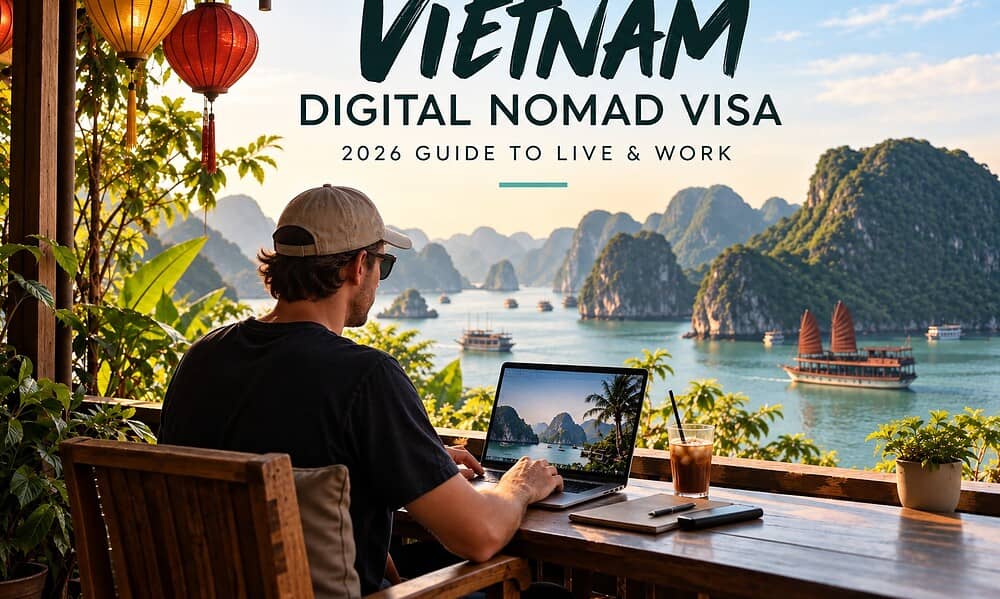
Most advice on the vietnam digital nomad visa starts from the wrong premise. It tells you to go hunting for a special remote work permit that doesn't really exist for the typical applicant.
That sends newcomers into a dead end.
Vietnam works well for digital nomads not because it has a clean, purpose-built visa category, but because the on-the-ground setup is practical enough to make life easy if you understand the trade-offs. The bureaucracy is imperfect. The lifestyle is strong. If you're willing to separate internet myth from what people do, Vietnam becomes much easier to manage.
The Truth About the Vietnam Digital Nomad Visa in 2026
There is no standard Vietnam digital nomad visa right now. Vietnam does not currently offer a dedicated digital nomad visa in the traditional sense, though it has introduced a 5-year talent visa aimed at highly specialized professionals rather than general remote workers, as explained in Wise’s Vietnam digital nomad visa guide.
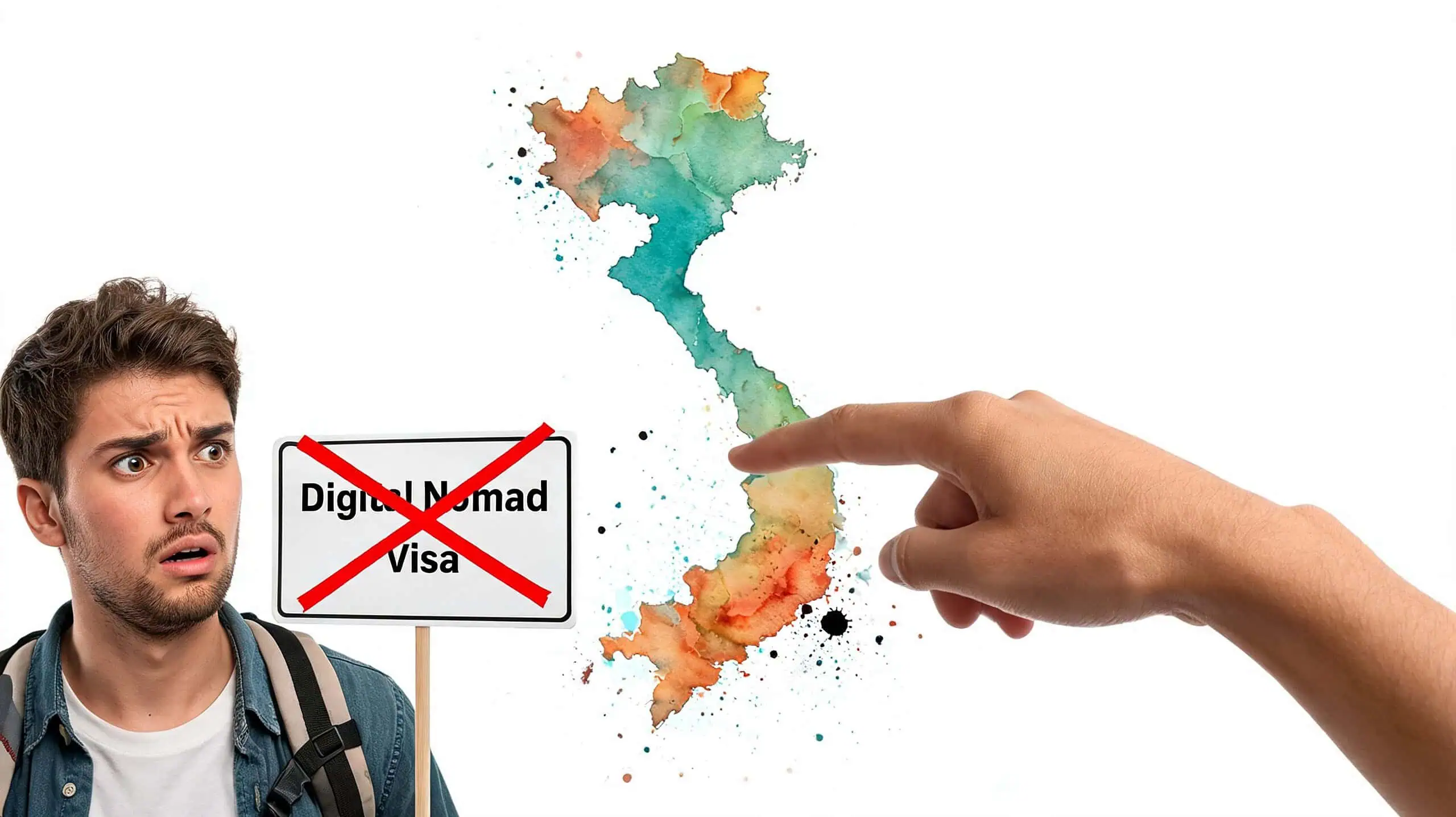
That sounds like bad news until you observe how people live here. Most remote workers use other routes. The common ones are the e-visa, business visa setups, or investor-based options. Remote work for foreign clients is widespread in practice, but the rules don't give you a neat box labeled “digital nomad.”
Practical rule: Treat Vietnam as a country with workable entry paths, not a country with one clean remote-work visa.
That legal gray area matters. If you're earning from foreign clients and not taking local employment, the situation is usually manageable. If you plan to work for a Vietnamese company without proper authorization, that's where things get messy.
The interesting part is where policy may be heading. Vietnam has already signaled interest in attracting longer-stay foreign professionals, and Remote Tribe’s write-up on Vietnam’s 10-year visa plan for global nomads is worth watching if you care about future options. For now, though, the smart move is simple. Stop searching for the perfect visa label and start choosing the pathway that matches how long you want to stay and how formal your setup needs to be.
Your Realistic Visa Pathways for Working Remotely
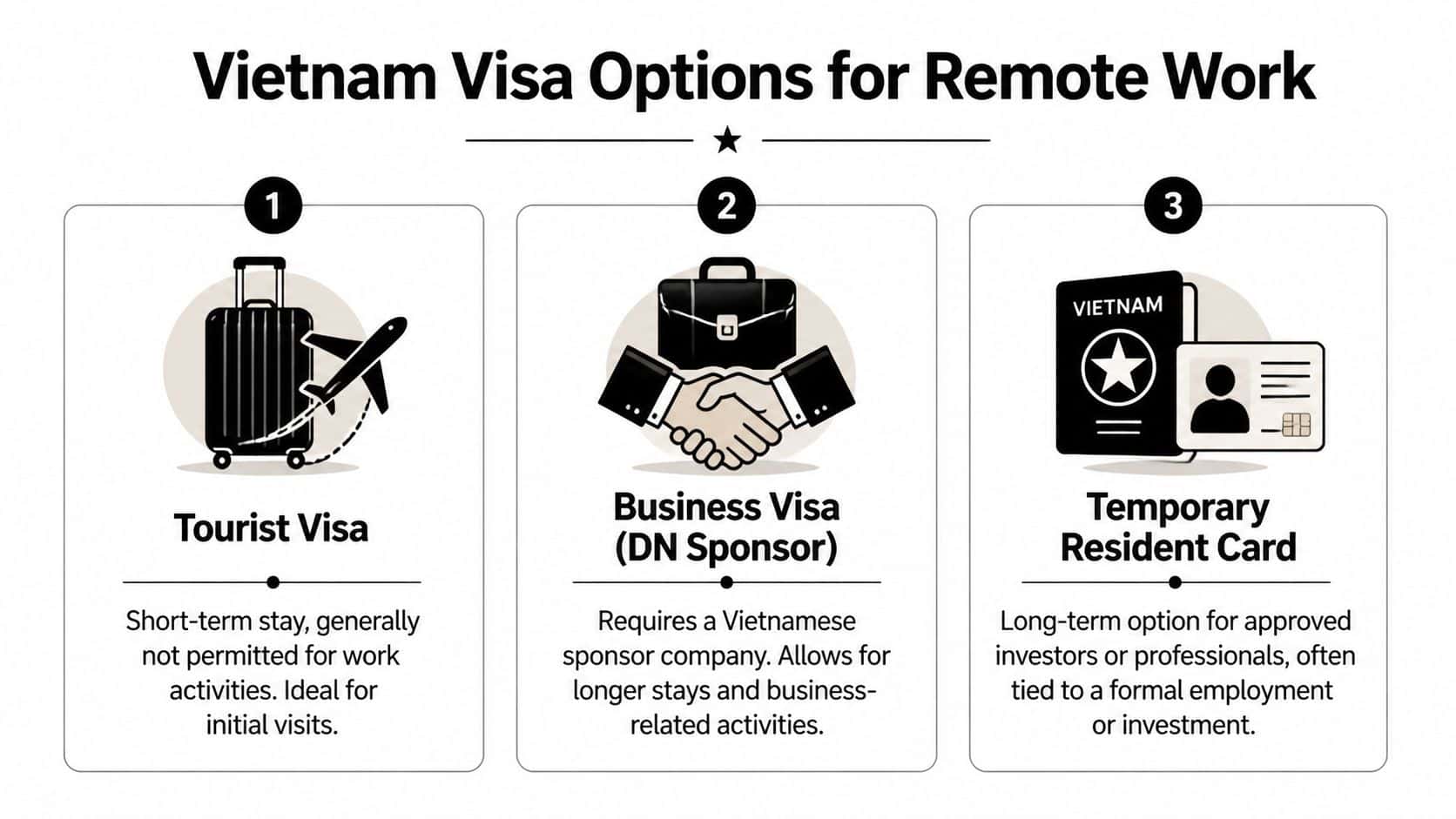
The visa game in Vietnam is about fit, not fantasy. Most nomads end up comparing three practical routes: a short-stay tourist-style path through the e-visa, a business visa route if they have local sponsorship, or a residence-linked path tied to more formal activity like investment or approved professional work.
The option most nomads actually use
Vietnam’s 90-day e-visa, introduced in August 2023, costs $25 for single entry or $50 for multiple entry, and that accessibility has made it the default option for many remote workers, especially compared with Indonesia’s route that requires proof of $130,000 USD in bank reserves, according to this Vietnam visa analysis.
For most freelancers, remote employees, and first-time arrivals, this is the cleanest place to start. It’s cheap, straightforward, and good enough to test whether Vietnam suits your workflow.
When a business route makes sense
A business visa can make sense if you’ve got an actual local relationship and need a more formal footing. That usually means dealing with sponsorship, paperwork, and a Vietnamese entity that can support the application.
It’s not the casual option. It’s the “I’m building something more anchored here” option.
When residence-linked options matter
If you're staying longer, making investments, or taking a more structured legal approach, residence-linked pathways become more relevant. These are less flexible for casual nomads but more suitable for people treating Vietnam as a serious base.
Here’s the clean comparison.
| Visa Type | Duration | Cost (USD) | Best For | Key Limitation |
|---|---|---|---|---|
| E-visa | 90 days | $25 single entry, $50 multiple entry | First-time nomads, remote workers with foreign income | Not a dedicated nomad visa |
| Business visa | Longer stay route varies by setup | Qualitative only | People with a Vietnamese sponsor | Requires local sponsorship |
| Temporary Resident Card | Long-term route tied to approved status | Qualitative only | Investors or formally approved professionals | Not designed for casual remote workers |
My blunt take
If you’re new to Vietnam, start with the e-visa. Don’t overcomplicate it.
If you’re trying to stay long term without repeated exits, skip the fantasy that one more tourist-style workaround will solve everything. At that point, either build a proper sponsored structure or look at the investor route. Vietnam rewards people who get realistic about their setup early.
How to Apply for the 90-Day E-Visa Step-by-Step
The hard part is not the visa. It is avoiding small mistakes that turn a simple online application into a week of pointless delay.
For remote workers, the 90-day e-visa is usually straightforward if you treat it like admin, not travel inspiration. Open the form with your passport beside you, your files already renamed, and your arrival plan roughly set. Vietnam’s system rewards accuracy and punishes guesswork.
Get your files ready before opening the form
I always prep the documents first. That cuts the failure points in half.
Use this short checklist:
- Passport: Check that it has enough validity left for your trip. If it is getting close to expiry, renew it before you apply.
- Portrait photo: Use a recent digital photo with a plain background that matches the stated format requirements.
- Passport bio page scan: Make sure every corner is visible and the text is sharp. Low-quality phone scans are where a lot of applicants create problems for themselves.
If you want onward travel in place before you finalize dates, this guide on what a dummy flight ticket is gives a practical overview without turning it into a whole side quest.
One clean folder helps more than people expect. Save the files with obvious names like passport-bio-page.jpg and portrait-photo.jpg so you are not hunting through downloads while the session is open.
Fill the application like the officer will compare every character
Because they will.
Enter your name exactly as it appears in your passport. Match passport number, date of birth, nationality, and issue details character for character. Do not shorten a middle name. Do not swap date formats in your head. Do not use the version of your name you usually put on airline loyalty profiles.
I have seen applications slowed down by tiny mismatches that felt harmless at the time. This is clerical work. Be boring and precise.
Double-check the parts that affect your actual arrival
A lot of nomads focus on the photo and forget the travel details. That is backwards.
Before paying and submitting, review:
- Entry date: Give yourself a buffer in case your flight shifts
- Entry point: Make sure it matches how you plan to enter Vietnam
- Single or multiple entry choice: Pick based on your real travel plan, not optimism
- Contact details: Use an email you monitor because that is where updates land
This is also where lifestyle planning starts, not after approval. If you are testing Da Nang for a month and might move to Ho Chi Minh City after, keep your first accommodation short and flexible. Vietnam is easy to like quickly. It is less forgiving if you lock yourself into the wrong apartment before you understand the neighborhood, noise, or commute to your preferred workspace.
Plan around the visa’s real limitation
The e-visa is useful, but it is not flexible inside the country. If your stay is ending, you should expect to leave and apply again rather than count on fixing it from inside Vietnam.
That matters in practice.
Book housing in chunks, not as one long commitment. Keep a cash and calendar buffer for an exit. Treat border days as low-output admin days, because they usually are. If you are juggling client calls, choose your exit and re-entry timing like an operator, not a backpacker chasing the cheapest fare.
The e-visa works well for a first base in Vietnam. It works badly for people who leave everything to the last week.
Long-Term Stay Strategies Beyond Visa Runs
Visa runs are fine until they aren’t. They interrupt routines, complicate housing, and make your life feel temporary even when your work isn’t.
If you want Vietnam as a proper base for a year or more, the more interesting conversation is the ĐT4 Investor Visa. For long-term stays, this route can offer a path to indefinite residency by investing in a Vietnamese business, which avoids the cycle of repeated exits required by the e-visa, based on this ĐT4 investor visa analysis.
Who this route actually suits
This isn’t just for big-money founders. It can also be relevant for:
- Solopreneurs: People who want a compliant base instead of serial short stays
- Freelancers with stable income: Especially those ready to formalize their structure
- Remote business owners: Anyone already operating through a company mindset rather than a backpacker mindset
The useful nuance is that the exact minimums are not federally specified in the source above, and the route can be accessible for solopreneurs depending on setup. That’s why this path deserves more attention than it gets.
What works and what doesn’t
What works is treating this as a legal structuring exercise. You talk to qualified local professionals, understand the company setup implications, and decide whether the administrative overhead is worth the stability.
What doesn’t work is trying to reverse-engineer a long-term life from repeated informal fixes.
If Vietnam is just one stop, the e-visa is enough. If Vietnam is your base, structure matters more than convenience.
There’s also a mindset shift here. Many nomads keep asking, “How do I stay longer without changing anything?” The better question is, “What setup matches the life I want?” If you want continuity, routine, and fewer border disruptions, the investor path is often the more honest answer.
Reviewing Vietnam’s Best Digital Nomad Cities
Pick the wrong city in Vietnam and the visa stops being your main problem. Noise, commute time, weak apartment WiFi, and the kind of social scene around you will shape your workdays far more than immigration paperwork.
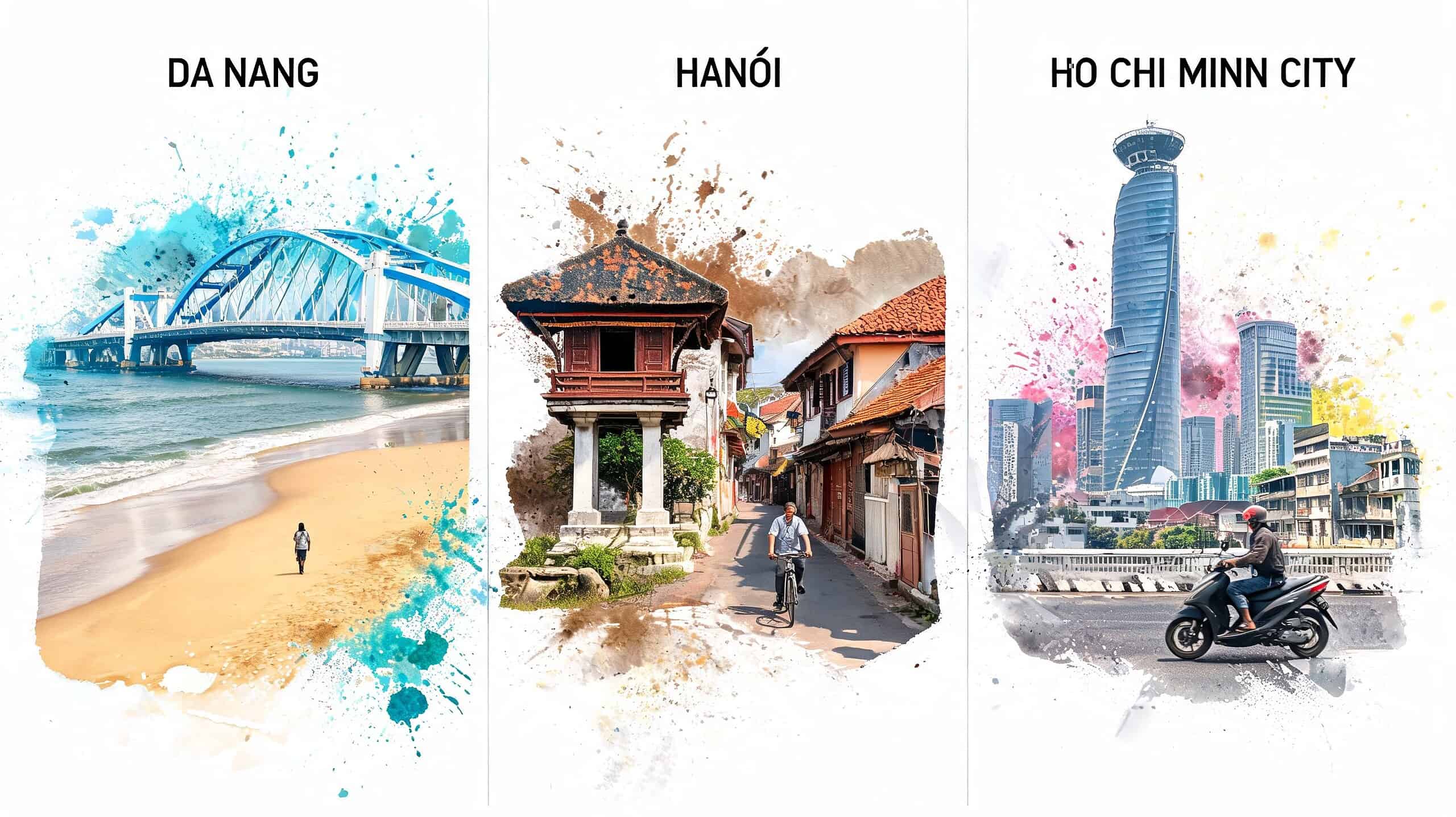
Vietnam stays attractive because you can still build a comfortable remote-work routine without burning through your budget. Rent, food, coffee, and transport remain reasonable by regional standards, but the experience changes a lot from city to city. I would choose based less on price and more on how you work. Deep focus, client calls, nightlife, beach access, and walkability rarely come in the same package.
Da Nang feels easiest
Da Nang is the city I recommend first to remote workers who want a base, not a story.
It has enough infrastructure to feel convenient, but it usually avoids the constant pressure you get in Ho Chi Minh City. The beach helps, but the bigger advantage is mental bandwidth. Shorter commutes, cleaner air, and a more forgiving pace make it easier to keep a real routine. If I needed a month of solid output with gym sessions, decent sleep, and regular coffee-shop work blocks, Da Nang would be the safest pick.
The trade-off is energy. If you thrive on dense networking, niche meetups, or the feeling that something important is always happening, Da Nang can start to feel a little too calm after a while. That calm is exactly why a lot of nomads stay longer.
Ho Chi Minh City gets the most done
Ho Chi Minh City is where I would send founders, agency operators, and remote workers who get restless in quiet places. The city moves fast, and that speed can be useful. More apartments, more events, more food options at every hour, more chances to meet people building things.
It also asks more from you. Traffic is draining, sidewalks are inconsistent, and a simple cross-town trip can eat a work block. If your nervous system handles noise well, the city feels productive. If you need stillness to think, it becomes expensive in a different way because your attention gets chipped away all day.
A quick look at the street-level rhythm helps:
I also find Ho Chi Minh City less beginner-friendly than people claim. It is easy to have a great week there. It is harder to build a balanced month unless you choose your neighborhood carefully.
Hanoi rewards a different kind of nomad
Hanoi has the strongest personality of the three. You feel it in the old apartment stock, the lakeside mornings, the cafe culture, and the constant hum of street life that feels older and less polished than the south.
I would not pick Hanoi for maximum convenience. I would pick it for character. If your ideal day includes working from a cafe with actual atmosphere, walking a neighborhood that does not feel interchangeable, and accepting a bit more friction in exchange for depth, Hanoi delivers that better than anywhere else in Vietnam.
The catch is practical. Winters can be damp and gray, traffic still wears you down, and apartment quality varies wildly. A beautiful listing photo means very little here until you test the mattress, the shower pressure, and the soundproofing yourself.
My short version
Da Nang is the easiest city to live in. Ho Chi Minh City is the easiest city to grow in. Hanoi is the easiest city to fall for.
If you want a wider benchmark before choosing Vietnam over other bases, this roundup of cool co-working spaces around the world for remote work helps put the trade-offs in perspective. Vietnam wins on day-to-day livability more often than it wins on polish, and for a lot of digital nomads, that is the better deal.
Top Coworking Spaces and Work-Friendly Cafes
A good city can still fail you if your work setup is weak. In Vietnam, I’d choose a decent apartment plus a reliable cafe circuit over paying for a coworking desk every single day. Coworking is useful, but the cafe culture is where the country really shines for remote workers.

Da Nang spots I’d actually use
Enouvo Space is a solid default if you want a proper desk day. It tends to attract both local professionals and foreign remote workers, which gives it a more grounded feel than flashy “nomad-only” spaces.
For cafes, 43 Factory Coffee Roaster is better for shorter work blocks than all-day marathons. The coffee is taken seriously, the space looks good, and it’s ideal when you need a few focused hours. The Cups Coffee is usually the safer pick if you want something more casual and forgiving.
Ho Chi Minh City for serious workdays
Dreamplex is the kind of place I’d use when calls matter and I need zero uncertainty. It feels professional, not Instagram-first. The Hive works well if you like a more community-driven atmosphere and don’t mind a bit more social energy around you.
For cafes, The Workshop is a classic for a reason. Good coffee, laptop-friendly culture, and enough people working that you never feel awkward opening a spreadsheet for three hours. Bosgaurus is excellent when you want better coffee and a cleaner, more design-led environment.
If you like scouting workspaces globally, Remote Tribe has a useful roundup of cool co-working spaces in the world to work from, which is handy when you compare Vietnam against other bases.
Hanoi for deep work and atmosphere
Toong is probably the most recognizable coworking name people mention, and for good reason. It usually feels polished without becoming sterile.
Cafe-wise, Hanoi is stronger than most cities at blending character with workability. Tranquil Books & Coffee is great for reading, writing, and quiet solo work. Loading T Cafe has more charm than ergonomic logic, but it’s exactly the sort of place people remember long after they leave.
My rule for Vietnam cafes is simple. Great coffee doesn’t always mean great laptop conditions. Do one scouting lap before you commit to a full workday.
Recommended Coliving and Accommodation Reviews
Accommodation in Vietnam usually comes down to one fork in the road. You either want built-in community, or you want independence with enough comfort to work well from home.
Coliving if you want people around you
Vietnam has coliving-style options in the main hubs, but they vary a lot in personality. Some are social in a useful way. Others feel like hostels with better branding.
The better coliving setups tend to work for new arrivals, solo travelers, and anyone who wants instant community without doing the awkward “how do I meet people here?” phase. What you’re paying for isn’t just a room. It’s reduced friction. You show up, settle in fast, and usually have people to grab coffee or dinner with on day one.
If you want to compare formats and what to watch for, Remote Tribe’s coliving space reviews are a helpful starting point.
Serviced apartments are the practical winner
For most working nomads, I think serviced apartments beat coliving after the first couple of weeks. They’re more stable, more private, and usually better for calls, sleep, and routine.
What I’d look for:
- A real desk setup: Not a decorative table pretending to be a workspace
- Strong Wi-Fi in the room: Lobby internet doesn’t count
- Included cleaning: This sounds minor until you’re juggling work deadlines
- Flexible lease conversations: Many landlords are more negotiable in practice than listings suggest
My honest recommendation by travel stage
If you’ve just arrived, book something short and social. Learn the neighborhoods. Figure out whether you prefer beach, business, or old-city energy.
Then switch.
The second place is usually the one that makes Vietnam click. That’s when people stop feeling like they’re passing through and start building a routine around a gym, a favorite pho spot, a work cafe, and a grocery run they can do half-asleep.
Essential Nomad Toolkit Reviews eSIMs and Banking
Your first useful purchase in Vietnam usually isn’t a desk pass. It’s connectivity that works the minute you land.
eSIM choices that make life easier
I like Airalo for convenience. It’s simple, familiar, and good when you want to install data before boarding your flight. The downside is that global eSIM products sometimes feel more convenient than generous.
Gigago is worth checking if you want something Vietnam-focused. It’s often the kind of product travelers use when they want a local-market feel without dealing with a shop counter right after landing.
If you prefer traditional carrier reliability, a Vinaphone tourist SIM is the sort of practical option many travelers still like. It’s not glamorous, but local carrier products often remove a lot of doubt around coverage and troubleshooting.
If you’re new to this setup, this explanation of why eSIMs are ideal for digital nomads and global citizens gives the broader logic.
Banking and money tools I’d keep simple
Wise is the tool I’d keep in the stack if I were setting up from scratch. It’s useful for moving money, handling multiple currencies, and avoiding the clunky feel of relying only on your home bank.
My toolkit would be:
- Wise for transfers and currency handling
- A backup card from a separate bank
- Some local cash for day-one basics
- Screenshots of important payment confirmations
Don’t overengineer this part. Redundancy matters more than cleverness.
Navigating Taxes and Your Legal Residency Status
The visa question gets all the attention. The tax question is what catches people off guard.
Vietnam can become sticky fast. Rents are reasonable, daily life is easy once you have your favorite cafe and apartment, and a planned short stay often turns into half a year before you notice. That is usually the point where legal residency and tax residency stop being abstract and start affecting real decisions.
A practical rule: if you spend more than 183 days in Vietnam, you may be treated as a tax resident under local rules. For remote workers, that can pull your worldwide income into the conversation. Whether that leads to tax due depends on your structure, your home country obligations, any treaty position, and how your income is earned.
Keep those issues separate in your head:
- Your visa status decides whether you are allowed to be in Vietnam
- Your tax residency status can decide where income is reportable or taxable
- Being casual about one often creates problems with the other
I have seen nomads get this wrong by assuming a border exit resets everything. It does not. Day counting is boring, but it matters.
What to do in practice
Track every entry and exit from day one. Use a spreadsheet, Notes app, or calendar. Keep screenshots of flight bookings and passport stamps. If immigration rules change or you later need to explain your timeline to an accountant, you want records that are cleaner than your memory.
If you already file taxes back home, add Vietnam to your planning early. Do not wait until your stay becomes long enough to feel permanent. A basic filing checklist helps, especially if you still prepare your own return. This self assessment tax return guide is a decent starting point before cross-border issues make the admin heavier.
One more practical distinction matters. Working online for foreign clients while staying in Vietnam is the gray area many nomads live in. Getting paid by a Vietnamese company or invoicing locally is a different category and usually needs proper local authorization. That line is easy to blur if you start picking up side work on the ground.
Tax residency is not a vibe. It is a day count, paperwork, and whether your setup holds up when someone asks questions.
This is not legal or tax advice. It is the playbook I would follow. Count your days, keep records, and get professional advice before your cheap, comfortable Vietnam base turns into a tax problem.
Frequently Asked Questions
Can I legally work online from Vietnam on a tourist-style setup
If your work is for foreign clients or a foreign employer, many nomads operate that way in practice. The gray area starts because there isn’t a clean dedicated nomad visa for general remote workers. Working for a Vietnamese company is a different matter and usually requires proper authorization.
Can I stay continuously on the e-visa
Not smoothly. The key issue is that the e-visa doesn’t let you just remain in-country and keep extending in a simple way. If you want continuity, build your plans around exits or consider a more formal long-stay structure.
Is Vietnam actually good for remote work
Yes, if your priorities are affordability, cafe culture, and flexible day-to-day living. It’s especially strong if you like choosing between apartment work, cafes, and coworking depending on the day.
Which city should I start with
Start with Da Nang if you want balance. Start with Ho Chi Minh City if you want energy and business momentum. Choose Hanoi if atmosphere matters more than convenience.
Should I use coliving or get an apartment
Use coliving for arrival. Use a serviced apartment for routine. That’s the simplest playbook for many individuals.
What’s the biggest mistake new nomads make in Vietnam
They obsess over finding a perfect visa category instead of building a workable system. Vietnam rewards practical planning much more than theoretical perfection.
Remote Tribe publishes practical guides for digital nomads who need help with visas, destinations, tools, coliving, and long-term remote work logistics. If Vietnam is on your shortlist, explore Remote Tribe for more destination playbooks and visa updates.








No Comment! Be the first one.