Why Sicily Should Be Your Next Base as a Digital Nomad (And Why I’m Heading to Italia Nomad Fest 2026)
As someone who has spent years working remotely across dozens of countries — and attending global gatherings like Bansko Nomad Fest, Nomad World Fest in Portugal, and many others — I’ve learned that certain destinations quietly sit on the edge of becoming major digital-nomad hubs.
Right now, I think Sicily is one of those places.
It combines affordability, culture, climate, and lifestyle in a way that many of Europe’s more established hubs can no longer match. And with the upcoming Italia Nomad Fest 2026 in Palermo, the island is quickly stepping into the spotlight for the global remote-work community.
Here’s why digital nomad Sicily deserves your attention, in my opinion as a senior memeber of the digital nomad community.
Table of Contents
Let’s talk a bit about Sicily: One of Europe’s Most Underrated Nomad Destinations
Compared to Lisbon, Barcelona, or Berlin, Sicily still feels largely undiscovered by the international nomad crowd (however, there are plenty of expats living there nowadays). That’s exactly what makes it attractive.
You get:
Mediterranean weather with long sunny seasons
A significantly lower cost of living than most Western European cities
Authentic local culture that hasn’t been diluted by mass digital-nomad migration
Incredible food, coastal scenery, and historic architecture everywhere you go
Cities like Palermo, Catania, and Siracusa (Ortigia) offer the infrastructure remote workers need, while still preserving a strong local identity — something many nomads like us are always seeking.
I haven’t been to Sicily just yet, but I will be going to the Italia Nomad Fest, believing this will be my perfect introduction to this italian island.
Like many of you, I’ve been seriously tempted by the idea of swapping my current setup for an Italian island life. To get a real sense of whether it’s a viable base or just a holiday fling, even before going there, I couldn’t wait, and I’ve been doing some research into the experiences of remote workers who are actually on the ground there right now.
The consensus paints a picture of a destination that is incredibly rewarding but distinctly different from the plug-and-play nomad hubs we are used to like Lisbon or Bali.
From what I’ve read, the biggest decision revolves around where to set up camp, with the community split largely between Catania and Palermo.
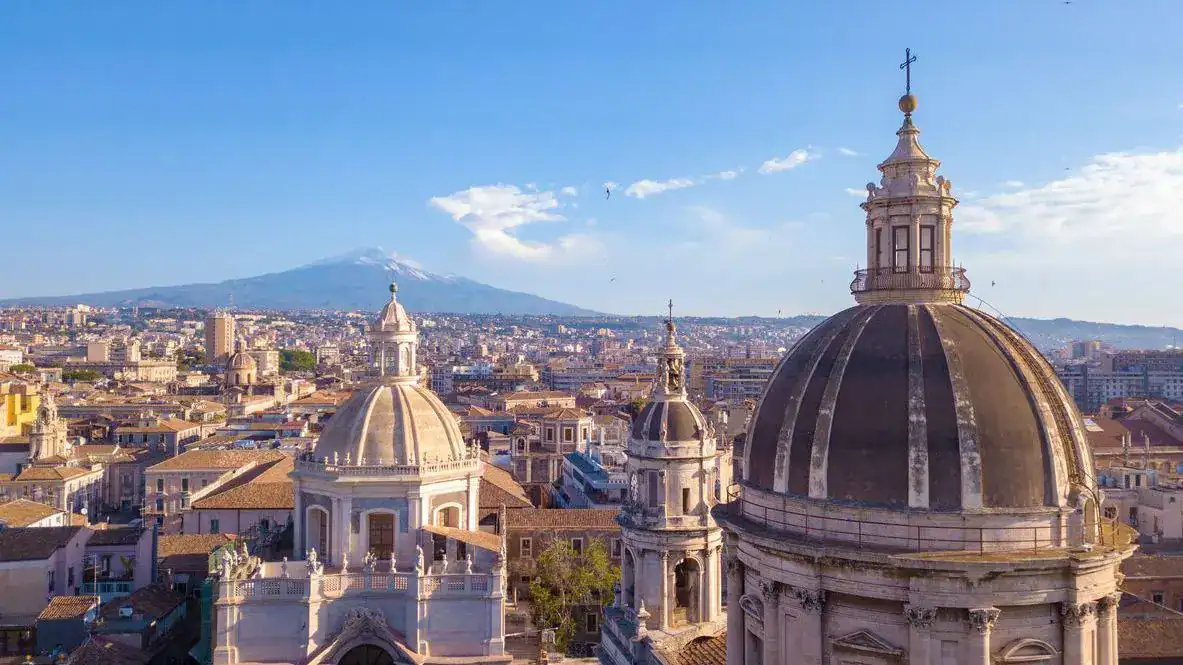
Catania seems to be the choice for those who want a “real” city vibe; people describe it as a bit gritty and energetic, with a university scene and a surprising amount of tech industry presence.
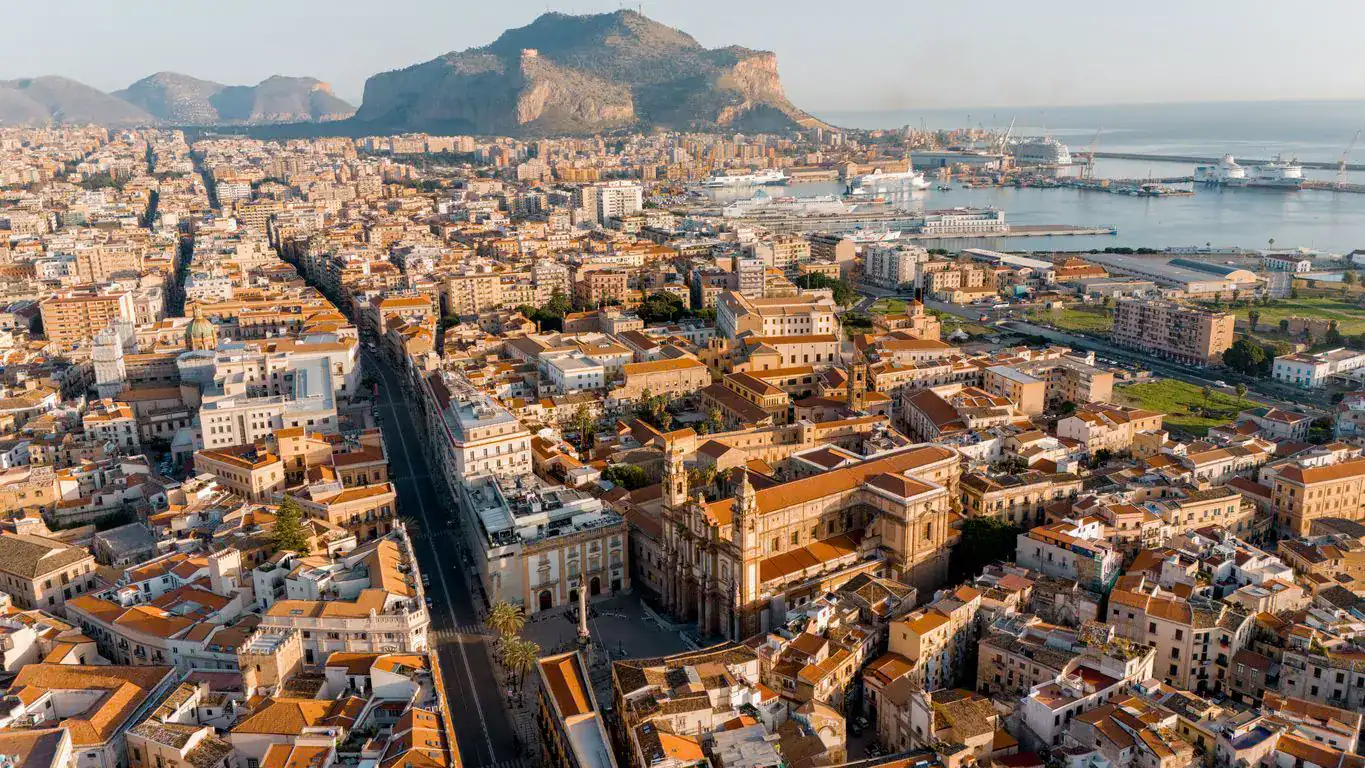
On the other hand, Palermo is often pitched as the better option due to its flight connections , alongside a slightly more cosmopolitan feel. While smaller spots like Ortigia in Siracusa look visually stunning in photos, the advice from long-termers is that they can feel a bit too tourist-centric and isolating for a multi-month stay unless you are looking for serious solitude. Also, Oritigia is very small, and you won’t have a chance to meet so many fellow travelers.
What strikes me most about the feedback is the warning about the social scene. The repeated lines I hear is that Sicily is not a place where you can get by easily inside an “expat bubble.” Unlike other major hubs, there isn’t a massive, pre-existing community of English-speaking nomads waiting to welcome you. The advice is clear: you need to learn some Italian to thrive there. I found that a bit strange, because I heard otherwise from my sources. There’s a huge expat community on the island, so the locals are speaking more English now than before. Knowing Italy, it’s probably advised to learn some super basic Italian; however, I don’t think nowadays their English is that bad.
Nevertheless, I’d be tempted to say that without the language, people report feeling a bit lonely and struggling to make deep connections with the locals, despite how friendly everyone is generally described to be. I will have to discover that myself!
The lifestyle trade-offs seem pretty clear-cut. On one hand, you get an incredible cost of living, a relaxed pace of life, and food that is universally praised as legendary. On the other hand, a few nomads mentioned a surprising downside: “food fatigue.” Because the local cuisine is so dominant, it’s apparently quite hard to find good international variety, so if you crave spicy Asian food or diverse dining options, you might find yourself out of luck outside the major cities. The verdict seems to be that Sicily is perfect if you want deep immersion and a slower life, but it might be a struggle if you’re looking for a convenient, English-first nomad experience
The financial and bureaucratic side of things is where the conversation gets really interesting. Everyone is talking about the potential tax incentives for new residents, with some claiming you can get a massive reduction in taxable income if you navigate the paperwork correctly. However, the infrastructure sounds like a mixed bag. This seems to be annoying for a lot of people over there.
While home internet seems reliable enough for Zoom, the coworking culture hasn’t really taken off yet, and I’ve read reports of spaces closing down post-pandemic. It sounds like this is a place where you need to be comfortable working from your Airbnb or kitchen table rather than relying on a trendy shared office.
Italia Nomad Fest 2026: A Turning Point for the Sicilian Nomad Scene
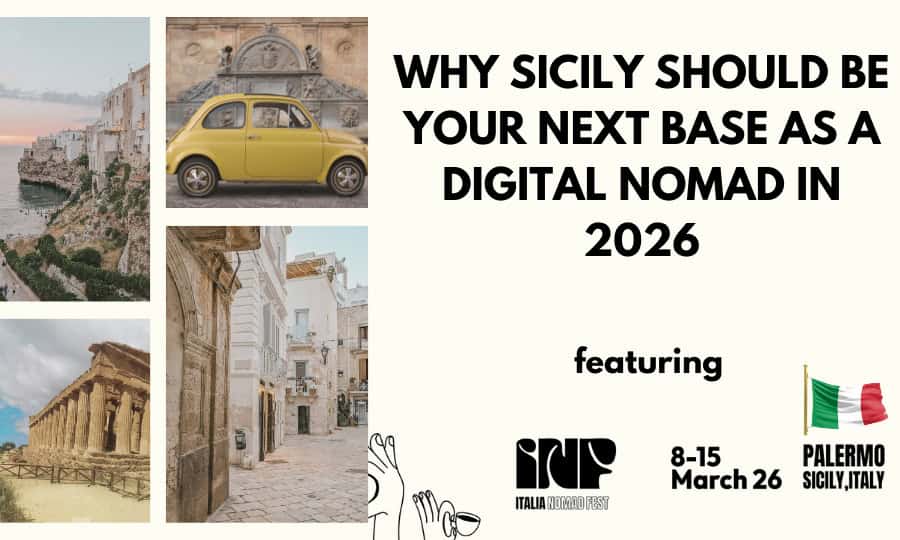
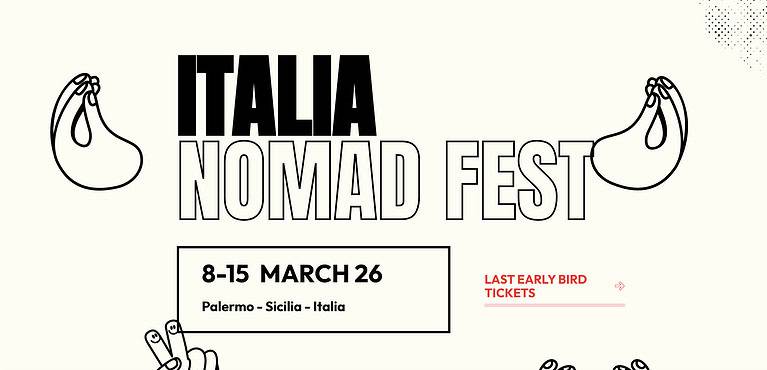
There’s something special happening this March in Sicily. Italia Nomad Fest 2026, will take place in Palermo from March 8–15.
When I spoke with Marco Traina and Federico Violante in an exclusive interview for Remote Tribe about the upcoming Italia Nomad Fest, what struck me first was how intentional their vision is. After attending many nomad events around the world, I’ve seen how gatherings can sometimes become bubbles where travelers interact mostly with each other.
Marco and Federico want something different.
As they explained it to me, their goal is not simply to host another digital nomad conference but to create a space where visitors and locals genuinely meet, collaborate, and learn from one another. Both of them come from deep roots in the nomad ecosystem—Marco through his early work building one of Italy’s pioneering coliving communities at Beet Community and Federico through years of personal experience as a nomad—and that background clearly shaped the direction of the festival.
They described the event almost as a living experiment in community integration. The festival, which will take place in Palermo from March 8 to 15, 2026, is designed to feel less like a traditional conference and more like a shared week of experiences.
Hosted at the historic Villa Niscemi, the program will include speakers, workshops, and discussions, but also sports, wellness activities, and informal gatherings meant to create organic connections. Marco told me they expect more than 35 speakers covering topics ranging from artificial intelligence to community building, yet he emphasized that the most important moments will probably happen outside the official sessions—over meals, walks through the city, or spontaneous collaborations that form when people spend real time together.
One idea that stayed with me after our discussion was their concept of “temporary citizenship.”
Federico explained that they want participants to feel that they are not just visiting Palermo but briefly becoming part of it. To support that, they are aiming for a balanced mix of participants, roughly half international nomads and half Italians, including local entrepreneurs, creatives, and residents. The intention is to create conversations that move in both directions, where nomads learn from local culture while also sharing skills, perspectives, and global experiences that benefit the local ecosystem. It’s a refreshing approach that aligns closely with how many of us in the remote-work community increasingly think about travel—less as consumption and more as participation.
Palermo itself plays a central role in this vision. As Marco described the city, you could feel how personal the project is for him. Palermo has always been a crossroads of civilizations, influenced by Arab, Norman, Spanish, and many other cultures over centuries, and that layered history gives it a natural openness to exchange and experimentation. Rather than choosing a polished, predictable destination, they intentionally selected a city that still feels authentic, complex, and alive, a place where meaningful interaction with local culture is not staged but happens naturally.
By the end of our conversation, what I understood clearly is that Italia Nomad Fest is not trying to replicate existing nomad conferences—it is trying to evolve the format. The founders see the festival as a step toward a more sustainable and locally connected version of the nomadic lifestyle, one where communities are built not only among travelers but also with the places that host them. Having attended many events over the years, I can say that this direction feels both timely and necessary, and it’s exactly why I’m personally excited to be part of it in Palermo.
🇮🇹 Italia Nomad Fest 2026 in a Nutshell
The festival will be hosted at the historic Villa Niscemi, featuring:
35+ international speakers
Workshops on topics such as AI, entrepreneurship, and community building
Wellness, sports, and informal networking activities
Cultural experiences designed to integrate participants into Palermo life
A concept they describe as “temporary citizenship” encourages visitors to engage with the city economically, culturally, and socially — a direction many of the world’s most thoughtful nomad events are now moving toward.
Having attended multiple global nomad festivals over the years, I can already see how this format stands out: it blends international networking with real local immersion, something the remote-work ecosystem increasingly values.
I think Sicily will gain global visibility with the Italia Nomad Fest 2026, taking place in Palermo from March 8–15.
After speaking with the founders, Marco Traina and Federico Violante, it’s clear that their vision goes beyond a typical remote-work conference. Their goal is to create an event where nomads and locals participate together, with roughly 50% local Italian attendees, encouraging meaningful cultural exchange rather than isolated expat networking.
Cost of Living: Europe Without the Price Tag
One of the biggest reasons Sicily is gaining attention is affordability.
Rent, dining, transport, and daily living expenses are often 30–50% lower than in Europe’s main nomad capitals. A comfortable apartment in digital nomad Palermo can cost far less than a room in Lisbon, while local markets, cafés, and restaurants make everyday life both affordable and enjoyable.
For freelancers, founders, and remote professionals who want a European base without the financial pressure of major capitals, Sicily hits a rare sweet spot.
Subscribe to our Newsletter
Get The Latest News On Digital Nomad Lifestyle, Remote Working Communities
And Much More.
100% spam free. We never share your email address. Unsubscribe anytime!
The Rise of Coliving and Agritourism: A New Community Layer in Italy
Another reason Sicily — and Italy more broadly — is becoming increasingly attractive to remote workers is the rapid growth of coliving spaces and the parallel rise of agritourism-based remote living.
Across the country, a new generation of coliving operators is transforming historic buildings, rural estates, and coastal properties into community-driven living environments designed for remote professionals. These spaces go beyond accommodation — they provide built-in social networks, professional collaboration opportunities, and shared experiences that help nomads integrate more quickly into local culture.
Italy’s strong agritourism tradition is also evolving to welcome remote workers. Farm stays that once focused mainly on tourism are now offering longer-term stays with reliable Wi-Fi, workspaces, and community programming. This matters for the digital-nomad ecosystem because it spreads economic impact beyond major cities, supports rural communities, and allows nomads to experience a slower, more immersive lifestyle.
Examples of this trend include coliving initiatives such as:
Outsite Florence and Outsite Rome, offering community-focused urban coliving experiences
Casa Netural (Matera), a long-standing community and innovation coliving hub
Sardinia Coliving projects emerging around Cagliari and coastal towns, combining island lifestyle with coworking infrastructure
Boutique rural coliving and agritourism hybrids across Tuscany, Puglia, and Sicily, where restored farmhouses host small remote-worker communities for seasonal residencies
For many experienced nomads, these environments represent the next phase of remote living — moving from purely transactional accommodation toward community-driven, locally integrated stays. As events like Italia Nomad Fest bring more international attention to Italy’s remote-work ecosystem, the growth of coliving and agritourism-based living is likely to play a central role in shaping how nomads experience the country in the coming years.
What You Can Do Beyond Work in Sicily
Here are some cool things you can do in the weeks why not after closing down the laptop. There are limited things but the continent is a throw away in case you want to go to Napoli and other places in South of Italy:
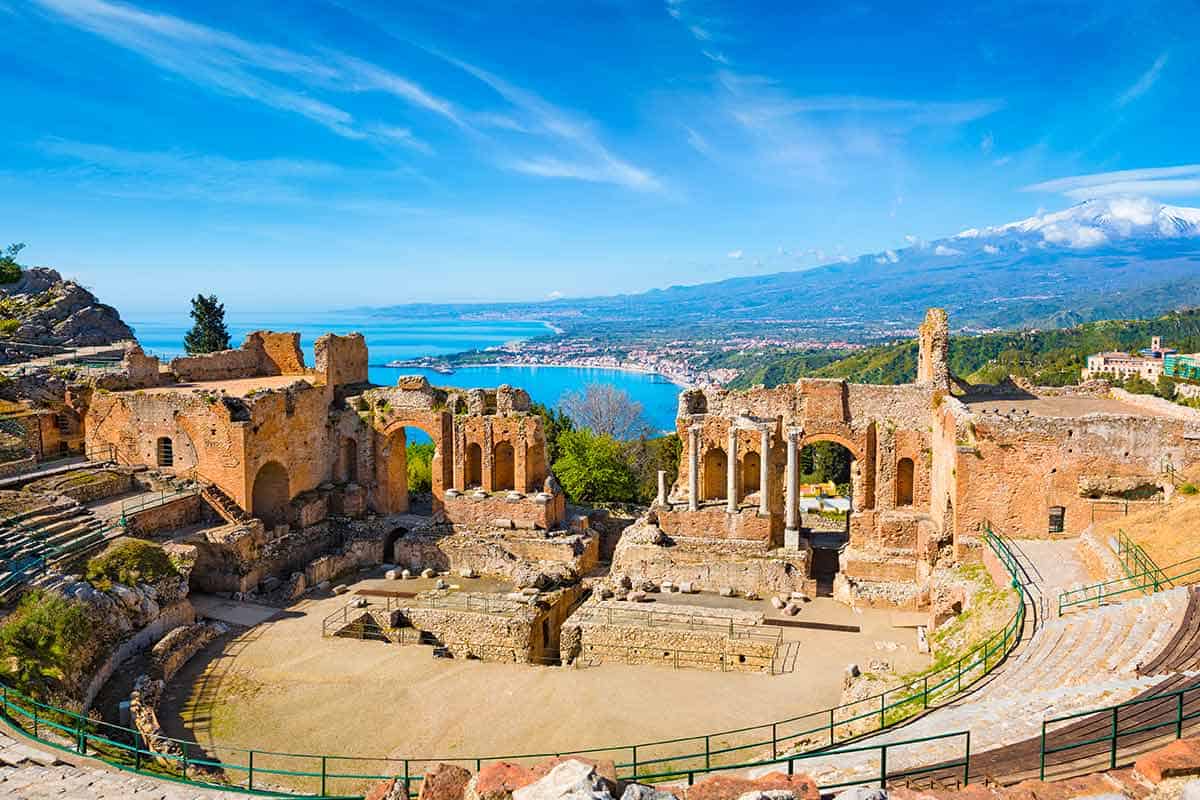
- Explore ancient Greek temples and UNESCO-listed towns like Noto
Hike Mount Etna or visit volcanic islands
Experience traditional markets, festivals, and Sicilian cuisine
Take coastal day trips across the island
Build connections with both locals and international nomads
Why Sicily’s Moment Is Just Beginning
Sicily sits at an interesting stage of development as a remote-work destination. The infrastructure is improving, coworking communities are expanding, and international events like Nomad Fest are accelerating awareness — yet the island still maintains the authenticity, affordability, and lifestyle advantages that early nomad hubs once had.
For many experienced remote workers, this combination is exactly what makes a destination special: developed enough to be practical, but early enough to feel authentic.
Final Thoughts
After years of working around the world, I’ve learned that the best digital-nomad destinations aren’t always the loudest or trendiest — they’re the ones that quietly combine lifestyle, culture, affordability, and community.
Digital nomad Sicily is moving quickly into that category.
And with the growth of digital nomad Palermo, expanding coworking networks, and initiatives like Italia Nomad Fest 2026, the island is positioning itself as one of Europe’s most compelling remote-work bases for the coming years.
If Sicily is already on your radar, this might be the right time to experience it — before the rest of the world catches up.
If you want to become a digital nomad or find your crew, sign up for our free newsletter and get upcoming articles straight to your inbox!
We’ve got some great content on our Instagram and on our Facebook Group too where you can network with other nomads from all over the world.
Your Travel Resources Handy In One Place 🗺️
🧳 Travel Insurance
Enjoy peace of mind during traveling and don’t leave your country without good travel insurance. We recommend Insured Nomads or Genki for international travel insurance.
💰Travel Finances
Get your travel finances smart and straight with Wise or Revolut.
🏨 Accommodations
For a short stay check out Booking or Agoda. Staying longer? Take a look at the offers at Airbnb. Hostels are the cheapest option that you can explore at Hostelworld.
🏡 Recommended places for long-term stay
Wanna know the accommodations where we lived during our digital nomad journey? Check out the places we enjoyed the most!
🎫 Book tours
Are you up for taking part in epic guided tours? Book ones you like using GetYourGuide or Viator.
🚗 Rent a car
To find great rental car deals check out Rental Cars and get ready for your car trip!
✈️ Book a flight
For the hottest deals check out Skyscanner, Kayak, Google Flights or WayAway.
🛡️ VPN
To stay safely connected while traveling, don’t forget about a good VPN. We recommend Surfshark or NordVPN.
Andrew Williams is the Founder of Remote Tribelife, an online magazine for digital nomads and remote working. Andrew has an extensive background in SEO and content marketing. His experience with digital marketing goes back to his early age in University when he founded a blog about startups and funding. He does his best writing in the coffee shops in Bali or in the condos of busy cities like Bangkok and Singapore. He is currently based in Singapore. You can connect with Andrew on his Linkedin profile and/or follow Remote Tribelife on Instagram.
Other Articles
3 Comments
Comments are closed.

[…] the soul that loves culture and creativity, Italia Nomad Fest blends networking with the rustic charm of Sicilian life. This week-long festival is a celebration […]
[…] Why Sicily Should Be Your Next Base as a Digital Nomad in 2026 […]
[…] Why Sicily Should Be Your Next Base as a Digital Nomad in 2026 […]