Scrolling through endless posts and trying to choose between Medellín’s mountain energy, Buenos Aires café culture, or a beach town in Brazil gets old fast. Most guides give you the same broad travel summary, then leave out the details that decide whether your workweek runs smoothly. You don’t need another generic roundup. You need a base you can use on Monday morning.
That means practical stuff. Which neighborhoods make day-to-day life easier. When a coworking pass is worth it and when a laptop-friendly café is enough. Whether local SIM options are straightforward or if a global eSIM is the simpler move. If you’re also job hunting while planning the move, it helps to find remote jobs before you land so your city choice matches your work setup.
I’ve written this as a playbook for people who care about both output and lifestyle. The south america best cities for nomads aren’t just pretty places with decent weather. They’re places where you can open your laptop without friction, settle into a routine, and still enjoy why you came.
There’s one important caveat. A lot of South America content still skips the infrastructure layer remote workers need. One clear gap highlighted in this review of South America city guides for nomads is that many guides talk about beauty and affordability but leave out internet quality, coworking depth, power reliability, and other basics that matter once the honeymoon phase ends. So this guide leans into those trade-offs.
Some cities here are obvious. Some are better for a slower season. None are perfect. That’s the point. If you know what each place does well, and where it falls short, you can choose a base that fits your work rather than forcing your work to fit the city.
1. Medellín, Colombia The Community Hub
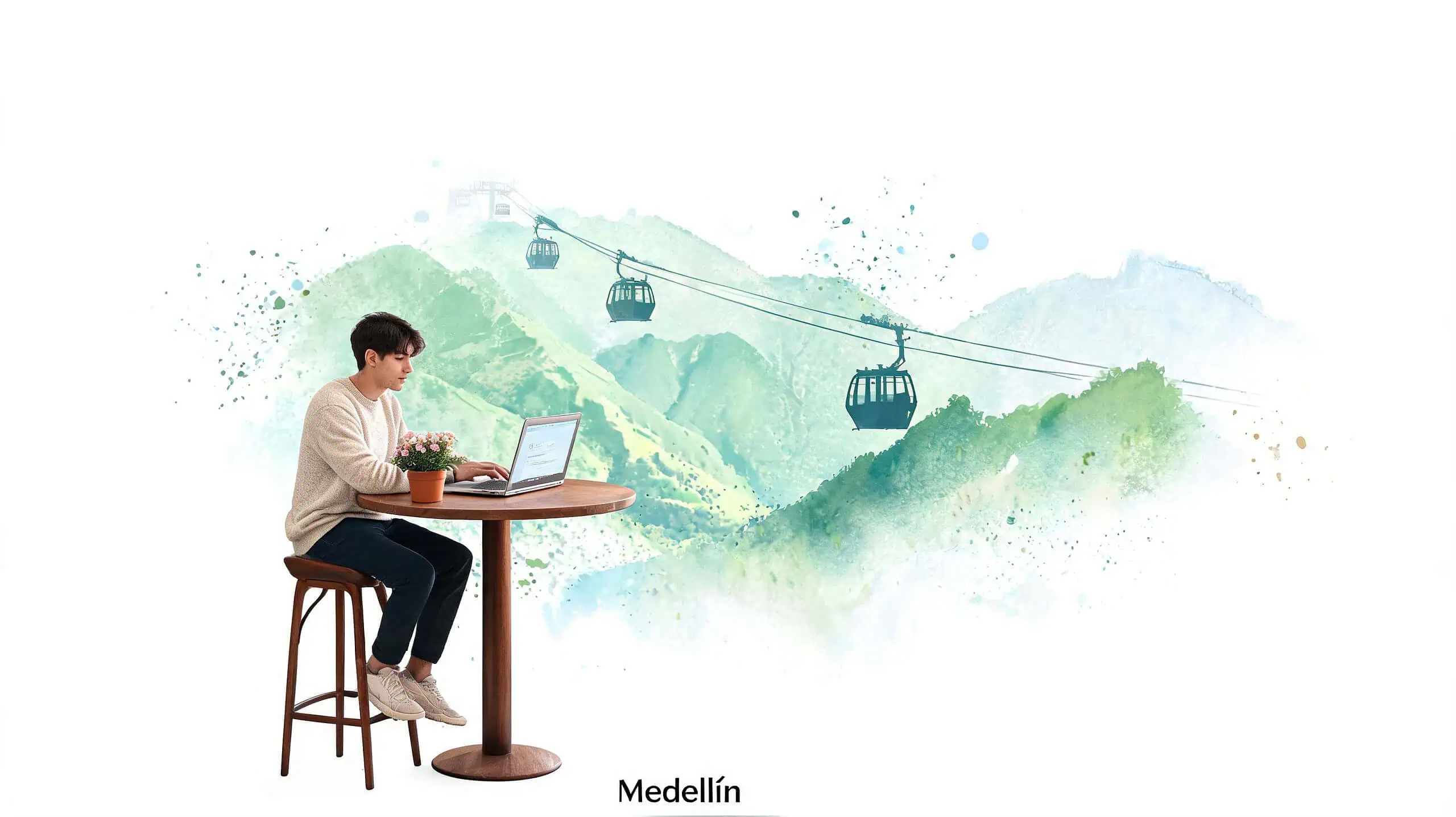
Medellín works because it removes friction. You land, pick a neighborhood like El Poblado or Laureles, and within a few days you can build a routine around cafés, coworking, gym, Spanish classes, and meetups. That’s a big reason it keeps showing up near the top of nomad conversations.
CityCost’s South America digital nomad ranking places Medellín at No. 1 among South American cities and gives it a Living Index of 51. That matches what many remote workers already know on the ground. Medellín is one of the easiest cities in the region to plug into quickly.
Where Medellín wins
The biggest advantage is community density. If you want accountability, social plans, startup chatter, and people who understand remote work, Medellín delivers. For a broader breakdown of why the city keeps attracting remote workers, Remote Tribe’s guide to South America nomad cities with strong community is a useful companion.
For products and places, I’d approach Medellín like this:
- Coworking first, apartment second: Start with a flexible coworking pass for your first week. It helps you test neighborhoods before committing to a longer stay.
- Global eSIM as your landing setup: Airalo and Holafly are the easiest low-friction option for your first days. They’re not always the cheapest path long term, but they save time when you arrive tired.
- Laptop cafés as overflow, not your only setup: Medellín has plenty of café work spots, but they’re best for lighter days, not your full operating system.
Practical rule: In Medellín, pay for structure early. A coworking pass and a reliable data setup in week one usually save more stress than they cost.
What doesn’t work as well
The mistake people make is treating Medellín as effortless forever. It’s easy to arrive, but if you stay longer you’ll notice the usual trade-offs. Popular areas can feel nomad-heavy, and some people never move beyond that bubble. If your Spanish matters to you, choose places and routines that force more local interaction.
Medellín is best for people who want momentum. If you need solitude, deep quiet, or a highly local daily rhythm, it can start to feel over-curated.
2. Buenos Aires, Argentina The Cultural Capital

Buenos Aires is one of those rare cities where work and pleasure can share the same day without competing. You can take morning calls, work from a café in Palermo, walk tree-lined streets in the afternoon, then end the day with dinner that feels like a reward rather than routine.
The strongest hard data in this article belongs here. According to this analysis of top Latin American cities for digital nomads, Buenos Aires sits among the top global choices for nomads, with average monthly rent for a one-bedroom in the city center around USD 500 to 700, meals in mid-range restaurants around USD 10 to 15, and a coworking ecosystem of over 100 spaces as of 2024. Those details explain why salaried remote workers keep shortlisting it.
Best use of the city
Buenos Aires is strongest when you treat it like a neighborhood city, not a citywide checklist. Palermo works well if you want a soft landing and easy café density. Recoleta is cleaner and calmer. San Telmo gives you more texture but not always the smoothest workday flow.
For setup, I’d keep it practical:
- Coworking for heavy meeting weeks: Buenos Aires has enough supply that you can usually find a vibe that fits. I’d prioritize spaces with phone booths if you’re in back-to-back calls.
- Cafés for writing and admin: This is one of the few cities where café work can be a real part of your week, not just an emergency option.
- Multi-currency planning matters: Buenos Aires rewards people who sort payment methods and money logistics before arrival.
A good personal angle on daily life there is this Remote Tribe interview with Kristin Vierra on being a digital nomad in Buenos Aires.
Buenos Aires is a great choice if you want your work base to feel like a real city first and a nomad hub second.
The trade-off
The city asks for more financial awareness than some other bases. If you arrive without a payment plan, a backup card, and some flexibility, you’ll feel the friction quickly. Buenos Aires is rewarding, but it isn’t a plug-and-play destination in the same way Medellín can be.
3. Santiago, Chile The Modern Metropolis
Santiago is for people who care about systems. If your work depends on dependable urban infrastructure, organized neighborhoods, and a city that feels built for business as much as leisure, Santiago is one of the strongest choices in the region.
It also stands out in the nomad benchmark data. Independent community-driven data from Nomad List, summarized in this Latin America nomad benchmark page, shows that Buenos Aires, Mexico City, and São Paulo rank highly overall, while Buenos Aires and Santiago perform above the continental mean for stable 4G and 5G coverage and WiFi availability in cafés and coworking spaces. For remote workers, that matters more than pretty marketing copy.
Best setup in Santiago
Santiago works best if you like to separate modes. Work in a coworking space. Use cafés for shorter sessions. Live near transit or near the places you use every week. The city rewards planning.
My practical stack for Santiago looks like this:
- Coworking over casual café hopping: This city has business-city energy. Lean into it.
- A local SIM or trusted global eSIM from day one: Because the city is spread out, mobile reliability matters when you’re moving between neighborhoods.
- A daypack and commuter mindset: Santiago often feels more like a city where you operate efficiently than one where you drift.
If you’re comparing country-level lifestyle fit as well as city fit, Remote Tribe’s piece on the best countries for travel and remote working is worth reading alongside this.
Where people misread Santiago
Some nomads bounce off Santiago because it doesn’t perform “fun” in the same way as Medellín or Buenos Aires. That’s fair. It can feel more reserved. But if your definition of a good base is low drama, solid infrastructure, and clear weekday rhythm, Santiago is easy to respect.
The weakness is emotional more than functional. You need to build your own social momentum here.
4. Florianópolis, Brazil The Island Paradise
Florianópolis is for people who want a work base that lets them touch grass, saltwater, and sunlight during the same week. It’s not the city I’d choose for a packed launch month, but it is a very good city for sustainable remote work when your calendar has some breathing room.
The appeal is simple. You can work hard, then surf or walk a trail without a huge production around it. That changes how a month feels.
What Floripa does better than big capitals
Florianópolis is one of the strongest lifestyle-value bases in this list because the workday doesn’t have to be the whole story. The right setup is usually neighborhood-dependent. Some areas feel beachy first and productive second. Others are much better balanced.
A few practical notes:
- Choose accommodation near your actual work habits: If you need coworking daily, don’t optimize only for beach access.
- Use cafés selectively: Beach towns often look laptop-friendly online but can be inconsistent in practice depending on season and crowd.
- Keep a backup data plan: Island life is great until you’re on a call and your main connection starts wobbling.
If your broader goal is to compare warm-weather bases, Remote Tribe’s guide to tropical places and islands to live and work fits well here.
Trade-offs that matter
Floripa is easy to romanticize. What doesn’t work is arriving with a city-center workflow and expecting the same convenience level. Distances, beach rhythms, and neighborhood differences matter more here than many people expect.
If you choose Florianópolis, optimize for routine, not fantasy. The beach is the bonus. Your work setup still needs to carry the week.
5. Lima, Peru The Culinary Giant
Lima is underrated as a work base because people often file it under “great food, stopover city.” That’s too shallow. If you choose the right neighborhood, Lima can be a productive urban base with enough variety to keep a longer stay interesting.
Miraflores is the easiest landing zone for most remote workers. Barranco suits people who want more character and don’t mind a little more movement in their environment. For deep work, I’d still bias toward spaces with dedicated desks or quiet zones rather than relying entirely on cafés.
Best products and place strategy
Lima is a city where your setup should be deliberate. Don’t improvise too much.
- Coworking for consistency: If your week includes client calls, workshops, or focused production, a proper workspace helps.
- Café work for short creative blocks: Lima’s café culture is enjoyable, but not every beautiful café is built for laptop sessions.
- eSIM on arrival, local option later: This is the cleanest way to avoid landing-day friction while you sort the rest.
Lima also benefits from being a city of distinct moods. You can build a sharp weekday routine, then shift into a more social or food-focused evening without crossing the entire city.
What to watch for
The challenge in Lima isn’t whether there’s enough to do. It’s whether you’ve chosen a base aligned with your work. A scenic stay can still create a frustrating commute pattern. And in a city this size, commute frustration accumulates quickly.
Lima is a good choice for nomads who want an urban base with strong lifestyle payoff, but it rewards practical neighborhood decisions.
6. Bogotá, Colombia The High-Altitude Creative
You finish a call in Chapinero, grab lunch a few blocks away, then head to a quieter café before the afternoon traffic thickens. Bogotá rewards that kind of planning. Treat it like a city of routines, not a city of improvisation, and it starts to make a lot of sense.
Bogotá works well for remote workers who want a more serious urban base. The appeal is not instant ease. It is depth. You get stronger museum and gallery access, a broader food scene, more neighborhood variety, and a work culture that fits people with client meetings, creative projects, or a full weekly schedule.
I’ve found Bogotá suits nomads who care about structure. If your ideal week includes a dependable coworking desk, a short walk to good coffee, and evenings that feel more local than expat-driven, it can be a better fit than Colombia’s more obvious first-stop city.
How to set up Bogotá well
The city is large enough that your neighborhood choice shapes your whole stay. Chapinero and Zona G are practical starting points for many remote workers because they give you solid café density, coworking access, and easier day-to-day logistics. Usaquén can work if you want something calmer and more residential, but you need to be honest about how often you will cross the city.
For coworking, Bogotá has enough quality options that I would not rely on an apartment alone if your work includes regular calls. Selina and WeWork are the obvious names, but independent spaces in Chapinero often feel better for longer stays because the atmosphere is less transient. For coliving, check whether the property is set up for work or just marketed that way. Good photos do not tell you if chairs are usable for a full day or if the common area turns noisy at 2 p.m.
The same rule applies to cafés. Bogotá has plenty of laptop-friendly spots, but many of the most attractive cafés are better for a 90-minute work block than a full shift. Test a place for power outlets, table height, and background noise before you decide it is part of your weekly setup.
Best products and place strategy
Bogotá is a city where the right tools save time fast.
- Coworking for your core workweek: Use a proper workspace for calls, admin, and focused production.
- Cafés for overflow, not your whole system: Great for writing or light work, less reliable for meeting-heavy days.
- eSIM first, local SIM if you stay longer: Airalo is the simple arrival option. If you settle in for a month or more, compare local plans from Claro or Movistar for better value.
If you are weighing a longer Colombia stay, this guide to the Colombia digital nomad visa in 2026 is worth reading before you book a longer lease.
Trade-offs to respect
Bogotá loses people on two fronts. Traffic is real, and the social scene usually takes more effort than travelers expect. A stylish apartment on the wrong side of your daily route can make the city feel exhausting within a week.
Altitude matters too. Some people adjust quickly. Others need several lighter days before they feel fully sharp at work.
Bogotá is one of the stronger choices in this south america best cities list for people who want creative energy with real city infrastructure. It is less plug-and-play than some alternatives, but for the right remote worker, it holds up better over a longer stay.
7. Quito, Ecuador The Andean Gem
Quito appeals to a different type of remote worker. This is a city for people who don’t need the most polished nomad ecosystem in exchange for atmosphere, altitude, and a more grounded daily rhythm.
The city feels compact in the way your week unfolds, even if the geography and hills shape movement more than a flat-grid city would. It can be a strong option for writers, freelancers, solo operators, and people who prefer quieter momentum over constant networking.
How to make Quito work
Quito is not a place where I’d rely on generic travel-blog assumptions about remote work. One of the clearest gaps in regional city coverage is that infrastructure details often go missing. That matters here more than in better-documented hubs.
My practical recommendation is simple:
- Test your apartment internet before committing to a longer stay.
- Have a backup workspace identified before your first workday.
- Keep a mobile data fallback active, especially if your work is deadline-sensitive.
On-the-ground advice: In cities with less standardized nomad coverage, don’t assume the listing photos tell you anything useful about your work setup.
Best fit for Quito
Quito works best as a calm base, not a hype base. If you want a city that pushes you into a polished international social scene, it may feel too quiet. If you want a place where you can settle, work, and use weekends well, it has real appeal.
The city rewards people who travel with backup systems and realistic expectations.
8. Montevideo, Uruguay The Stable Haven
Montevideo is the anti-chaos option. It’s not the city most nomads brag about online, but it’s one of the easiest places on this list to imagine living in without turning your whole life into a logistics project.
That matters. Not every great base needs to feel exciting every hour. Sometimes the best choice is the one that leaves you with enough mental bandwidth to do your actual job well.
Why Montevideo earns a spot
Montevideo is strongest for remote workers who want calm, walkable routines, coastal air, and fewer moving parts. It’s a good city for longer stretches when novelty matters less than sustainability.
A practical operating model here looks like this:
- Apartment-first strategy: This is a city where home comfort matters a lot.
- Coworking as a supplement: Use it for structure and social contact, not necessarily every day.
- Simple mobile setup: A reliable eSIM or local SIM is usually enough because the city’s appeal is stable routine, not constant movement.
What doesn’t shine
Montevideo can feel subdued if you want frictionless networking or a louder international scene. It’s also not the city I’d recommend if your main goal is maximizing novelty per week.
Still, for some people, Montevideo is exactly what they’ve been missing. A base where the city stops demanding attention and starts supporting your life.
9. Cartagena, Colombia The Caribbean Jewel
Cartagena is one of the easiest cities to fall for quickly and one of the easiest to misjudge as a long-term work base. It has color, energy, history, heat, and enough visual appeal to make every day feel cinematic. None of that guarantees a smooth work month.
The smart way to use Cartagena is to be honest about your workload. If you’re in a lighter season, it can be excellent. If you’re entering a high-pressure sprint, it may be better as a shorter stay or a recovery base between heavier cities.
Best way to use Cartagena
Cartagena works when you build your week around controlled bursts of productivity.
- Book accommodation with a verified work area: Don’t assume charm translates to function.
- Use coworking or hotel business facilities for key call days: Structure saves the week in such settings.
- Treat cafés as secondary: Great ambiance doesn’t always equal great laptop time.
The city is at its best when you stop trying to force full-speed output every day. Work in focused blocks. Enjoy the evenings. Keep your expectations aligned with the environment.
Main caution
Cartagena can seduce people into under-planning. Then they spend half the stay renegotiating the basics. If you choose it, choose a strong accommodation setup first and let the beauty be the bonus.
Quito asks for backup systems. Cartagena asks for discipline.
10. Cuenca, Ecuador The Affordable Retreat
Cuenca attracts people who are done chasing the loudest scene. It offers a slower pace, a livable rhythm, and the kind of day-to-day simplicity that can be very attractive after months of constant movement.
But Cuenca also highlights a broader truth about South America destination content. The cultural appeal is easy to find. The remote work detail often isn’t. The infrastructure gap noted earlier is especially relevant here, because many city guides praise affordability and safety while skipping the productivity basics remote workers need.
Cuenca’s real value
Cuenca makes sense for nomads who want a quieter base for focused work, lower stimulation, and more stable routines. It’s often a better fit for deep work than for networking.
The practical playbook is straightforward:
- Verify internet quality before paying for a longer stay.
- Ask directly about workspace setup, not just WiFi.
- Keep a second connection option ready through a mobile plan or eSIM product.

Where Cuenca fits best
Cuenca is a good counterweight to the more social cities in this list. Do a heavier community month in Medellín or Buenos Aires, then reset somewhere slower. That’s where Cuenca often shines.
It isn’t the strongest choice for people who need a dense ecosystem of coworking, events, and chance encounters. It is a good choice for people who want to think clearly and spend less energy managing the city itself.
Top 10 South American Cities Comparison
| City | 🔄 Implementation complexity | ⚡ Resource requirements | 📊 Expected outcomes | 💡 Ideal use cases | ⭐ Key advantages |
|---|---|---|---|---|---|
| Medellín, Colombia | Low–Moderate: easy to settle, active communities | Low–Medium: affordable rent; bring hotspot backup | High: strong networking, reliable coworking options | Social nomads, community-building, startups | Pleasant climate, vibrant nomad scene |
| Buenos Aires, Argentina | Moderate: paperwork and cash handling nuances | Low: very affordable if managing exchange rates | High cultural enrichment; variable internet | Culture lovers, long stays, café work | Rich arts scene, European feel, low cost |
| Santiago, Chile | Moderate: straightforward but costlier city living | High: higher rents; top-tier internet and services | Very high: stable productivity, startup access | Tech professionals, safety-focused nomads | First-world infrastructure, fast internet |
| Florianópolis, Brazil | Moderate: island logistics; pick neighborhood wisely | Medium: variable coverage; portable router advised | Good: balanced work + outdoor lifestyle | Surfing/active nomads, lifestyle-focused remote work | Beaches, outdoor activities, growing tech scene |
| Lima, Peru | Low–Moderate: easy neighborhood options | Low: affordable; generally good cafe WiFi | Good: excellent food/culture with workable setups | Foodie nomads, coastal living, short stays | World-class cuisine, varied neighborhoods |
| Bogotá, Colombia | Moderate: high-altitude city dynamics, busy transit | Medium: solid coworking; use ride apps after dark | Good: creative community and flexible base | Creatives, freelancers, startup workers | Diverse neighborhoods, growing startup scene |
| Quito, Ecuador | Low: dollar simplifies finances; compact city | Low: very affordable; local SIM recommended | Good: affordable base with easy nature access | Budget nomads, weekend adventurers | UNESCO old town, proximity to Andes/Amazon |
| Montevideo, Uruguay | Low: simple residency, calm administrative process | Medium–High: higher QOL costs; excellent internet | Very high: peaceful, reliable remote work base | Long-term stays, safety- and stability-seeking nomads | Political stability, fast fiber internet |
| Cartagena, Colombia | Moderate: tourist season impacts services | Medium: need hotspot/AC; variable WiFi in high season | Moderate: sunny, relaxed work pace; some slowdowns | Beach-loving nomads, cultural short stays | Historic walled city, Caribbean access |
| Cuenca, Ecuador | Low: easy, walkable, very affordable | Low: cheap rents; basic coworking scene | Moderate: slow-paced, focused lifestyle | Low-budget long-term stays, retirees | Low cost of living, colonial charm |
Choose Your Base, Not Just a Destination
The best city usually isn’t the one with the most hype. It’s the one that fits the shape of your work and the kind of life you want during this season. That sounds obvious, but a lot of nomads still choose cities the way tourists choose weekend trips. Then they wonder why they feel scattered, unproductive, or oddly tired in a place they were supposed to love.
Medellín is the easiest answer if you want community and a fast start. Buenos Aires is stronger if you want café culture, neighborhood depth, and a city that feels rich even on ordinary weekdays. Santiago is a practical choice for people who care about infrastructure and a more businesslike rhythm. Bogotá gives you scale and creative energy, but asks for more commitment before it clicks.
Then there are the cities that work because they solve a different problem. Florianópolis is excellent when you want better balance between work and outdoors. Lima gives you urban variety with real lifestyle upside if you choose your neighborhood carefully. Montevideo is one of the best calm options on the list. Cartagena and Cuenca both work better when used intentionally, not romantically. One is easier in a lighter work season. The other is stronger for slower, focused stretches.
That’s the core lesson in evaluating the south america best cities for nomads. Don’t ask which city is best in the abstract. Ask which city supports your workload, your attention span, your budget style, and your social needs. A founder doing daily calls, a freelancer writing long-form work, and a remote employee in back-to-back meetings may all choose completely different bases for good reasons.
A few product decisions also make a bigger difference than people expect. Your connectivity stack matters. For many nomads, that means landing with a global eSIM such as Airalo or Holafly, then deciding whether a local SIM makes more sense once you understand the city. Your workspace stack matters too. In some cities, cafés are a real part of the routine. In others, they’re best treated as overflow. And your accommodation matters more than almost anything else. A beautiful apartment with awkward seating and unreliable internet can undermine an otherwise great month.
I’d also keep one principle in mind across the region. Build redundancy into your setup. Have a main workspace, a backup workspace, and a mobile data fallback. That’s not overkill. It’s just how you protect your time when you’re working across unfamiliar cities.
If you want more destination-level guidance, visa updates, and practical remote work planning, Remote Tribe is relevant because it publishes articles, guides, and community content specifically for digital nomads and remote workers. Used well, resources like that can help you compare cities before you commit, instead of figuring everything out mid-stay.
Choose the base that makes your week easier. If the city also gives you better coffee, stronger routines, new friends, and a few memorable weekends, that’s the upside. The decision doesn’t need to be perfect. It just needs to fit your next chapter well enough that you can do good work and enjoy where you are.
If you want more practical destination breakdowns, visa updates, and remote-work planning help, take a look at Remote Tribe. It’s built for digital nomads and remote workers who want grounded guidance, not just travel inspiration.