You’re probably doing the same calculation most remote workers do before booking a one-way flight south. Can I work there without watching my bag every minute. Will the WiFi hold for calls. Can I trust the taxi from the airport. Is the cheap apartment in a neighborhood where I’ll feel fine walking back after dinner.
That’s the practical version of “is South America safe?” It isn’t a yes-or-no question. It’s a street-by-street, product-by-product, habit-by-habit decision. The safest countries to visit in South America can still feel frustrating if you pick the wrong district, weak mobile data, or an apartment that looks good in photos but puts you far from reliable cafes and trusted transport.
For digital nomads, safety and livability are tied together. A calm neighborhood with decent foot traffic, a work-friendly cafe that doesn’t mind laptops, a coliving with secure entry, and an eSIM that reconnects when fiber drops matter as much as a national ranking. If you’re hiring while traveling or building a distributed team from the road, that stability matters even more, especially if you’re also looking to hire LATAM talent and spend more time on work than on logistics.
The good news is that South America has several solid bases, and some are much better suited to remote life than old travel forums suggest. This guide keeps the list practical. It focuses on where nomads function well, what trade-offs are worth accepting, and which places feel easiest to trust for a stay that lasts longer than a vacation.
1. Uruguay The Undisputed Champion of Stability and Safety
You land in Montevideo, grab a SIM at the airport or in the city, call a rideshare, and get to your apartment without the low-grade friction that drains your first day in a new country. That’s Uruguay’s real advantage for remote workers. It feels predictable.
For safety, Uruguay stays near the top of South America in widely cited peace and stability rankings, and the U.S. State Department currently lists it at Level 2: Exercise Increased Caution. In practice, that usually means staying alert for petty theft in Montevideo rather than worrying about serious crime targeting visitors.
Why Uruguay works so well for nomads
Montevideo is the strongest base if your priority is a steady work routine. Pocitos and Punta Carretas keep coming up for good reason. You can walk to groceries, gyms, pharmacies, and cafés that are comfortable with laptops, and you’re less likely to end up isolated on a block that looks fine online but feels empty at night.
Colonia del Sacramento suits a different kind of stay. It’s slower, smaller, and better for people who want quiet mornings, short walks, and the option to hop over to Buenos Aires by ferry. Punta del Este is polished and easy for a summer stretch, but it makes more sense if beach living is part of the goal. For a longer work-focused base, Montevideo is usually the better call.
If you’re comparing bases beyond Uruguay, this guide to digital nomad cities in South America with strong community helps put Montevideo in context.
Practical rule: Uruguay is the safest-feeling pick in the region for people who want consistency, but you pay for it.
The real trade-off: calm costs money
Uruguay is rarely the budget winner. Rent, groceries, and eating out can surprise people who arrive expecting broader South America pricing. I still recommend it to first-time nomads in the region because fewer logistical problems often offset the higher monthly spend. A base that lets you work well, sleep well, and move around confidently can be worth more than a cheaper city that keeps interrupting your week.
Setup advice that actually helps
A local Antel line is usually the simplest starting point. Coverage is solid, setup is straightforward, and having a local number helps with landlords, deliveries, and service bookings. If you prefer to land connected, use an eSIM first and switch later once you know your apartment’s WiFi is reliable.
Housing choice matters more than chasing a prettier listing. Secure entry, good lighting on the street, and a location inside Pocitos or Punta Carretas will improve daily life more than extra design touches.
A few habits make Uruguay even easier:
- Stay close to your routine: Pocitos and Punta Carretas are the easiest neighborhoods for walkable remote life.
- Use rideshare late at night: Montevideo is manageable, but quiet areas near the port are not where I’d choose to walk alone after dark.
- Test cafés for work, not just coffee: Some spots look great and have weak outlets, unstable WiFi, or cramped seating. Do one short session before making it your default place.
- Pick coliving or apartments with responsive hosts: Uruguay is calm, but slow property communication can still waste work hours.
Uruguay earns the top spot here because it reduces the number of things you have to think about. For digital nomads, that matters. Less time spent managing risk and logistics means more time working, exploring, and enjoying the base you paid for.
2. Chile The Modern Powerhouse with First-World Infrastructure

Chile feels operationally easy. That matters more than people think. When the metro is simple, rideshare coverage is strong, sidewalks are decent, and you can find good coffee plus fast urban services in the same neighborhood, your whole workweek gets lighter.
Among the region’s safer options, Chile stands out for infrastructure. It’s the country I’d recommend to someone who wants South America without giving up the habits they built in Europe or North America.
Neighborhoods that make Chile work
In Santiago, Providencia and Las Condes are the obvious answers for a reason. They’re practical. You can build a routine around gyms, cafes, business services, grocery stores, and transport without constantly recalculating risk.
Valparaíso is more atmospheric and more uneven. It’s great for a shorter creative stretch, especially if you like colorful streets and independent cafes, but I wouldn’t automatically pick it over Santiago for a focused work month.
If you’re still comparing city options across the continent, this guide to digital nomad cities in South America with strong community helps frame where Chile fits.
Products and habits that help
For day-one connectivity, Airalo is convenient if you want data before your plane lands. If you stay longer, many nomads switch to a local provider like WOM or Entel for better day-to-day value and hotspot flexibility.
Cabify and Uber are the default move in Santiago. That’s partly about convenience and partly about reducing taxi friction, especially after dark or after airport arrivals.
What works well in Chile:
- Use an eSIM before arrival: Airalo is handy for instant connection and map access.
- Base in modern districts: Providencia and Las Condes remove a lot of daily stress.
- Keep a hotspot option ready: In more remote areas like the Atacama, a mobile backup matters.
- Plan for healthcare costs: Travel insurance isn’t optional if you want financial peace of mind.
Chile is one of the easiest places in South America to maintain a professional routine. The trade-off is that “easy” usually costs more.
If you’re the type of remote worker who gets drained by daily disorder, Chile earns its place on any shortlist of the safest countries to visit in South America.
3. Argentina The Cultural Giant with Unbeatable Value
You land in Buenos Aires, get online from the airport, and by afternoon you are answering Slack messages from a cafe in Palermo. By evening, the same city asks for more street awareness than Santiago or Montevideo. That split is Argentina in one sentence. It can be one of the best-value bases in South America for remote work, but only if you choose your neighborhood well and keep your daily systems tight.
Argentina also rewards context over headlines. The Global Peace Index 2024 results from Vision of Humanity place Argentina in the safer half globally, but day-to-day experience still shifts with inflation, petty theft patterns, and the street-by-street differences that visitors often underestimate. For nomads, that means safety is less about country-level ranking and more about whether your apartment, SIM setup, cash strategy, and late-night transport choices are solid.
Where Argentina works best for remote life
Palermo Soho remains the easiest on-ramp. You get strong cafe density, plenty of short-term rentals, and enough English-friendly infrastructure to settle in fast. For focused work, I would not pick just any pretty cafe. I would look for tables that support a laptop, reliable outlets, and staff who are used to people staying through a full work block.
Recoleta suits nomads who want cleaner routines and quieter evenings. Belgrano often works well for longer stays because it feels more residential and less performative. Bariloche is the outlier. It trades community density and startup energy for lakes, trails, and a much better reset if you are burnt out and want a slower month.
The Buenos Aires lifestyle is easier to understand through stories from people living it, like this digital nomad interview from Buenos Aires.
What makes Argentina easy, and what still trips people up
Argentina has a better remote-work rhythm than many first-timers expect. Cafe culture is real, coworking exists across the main nomad districts, and coliving can reduce the friction of arrival. Outpost is one recognizable option if you want furnished space, events, and a ready-made social layer instead of spending your first week comparing apartments, Wi-Fi speeds, and desk setups.
Connectivity is usually simple if you prepare before landing. Holafly is a common first-step eSIM for instant data, especially if you want maps and ride-hailing working the moment you arrive. Money takes more thought. Many long-stay travelers still use Western Union because exchange-rate realities can make card reliance and ATM withdrawals expensive or inconsistent.
Healthcare planning matters too, especially if Argentina becomes a multi-month base rather than a short city break. This breakdown of travel health insurance vs international health insurance for nomads helps clarify which type fits a temporary stay and which makes more sense if you are living on the road full time.
A few habits do most of the work:
- Base yourself in proven neighborhoods: Palermo, Recoleta, and Belgrano are the easiest places to maintain a routine with less daily friction.
- Keep your phone off the street: Snatch-and-grab theft happens fast, especially when people text while walking near traffic.
- Test cafes for workability, not aesthetics: Good coffee is common. Stable Wi-Fi, enough outlets, and chairs you can tolerate for four hours are less common.
- Plan cash access early: Exchange-rate swings can affect your budget more than accommodation prices do.
- Use ride-hailing at night: It removes a lot of unnecessary uncertainty after dinners, events, or airport runs.

Argentina earns its place on this list because it offers a rare mix of culture, workability, and value. The trade-off is volatility. If you stay alert, pick your area carefully, and build around practical routines instead of romance, Argentina can be one of the strongest remote-work bases in South America.
4. Colombia The Comeback Kid with Perfect Weather and Vibes
Colombia isn’t the easiest country on this list, but it may be the most seductive for remote workers. People come for a month, then keep extending because Medellín is comfortable, the social scene is strong, and the work-life balance can feel unusually good when you choose your base well.
The mistake is assuming the whole city works the same way. It doesn’t. Neighborhood choice decides whether Colombia feels smooth or exhausting.
The neighborhoods that actually suit nomad life
El Poblado gets most of the attention because it’s easy. It has many of the cafes, apartments, and coliving options international visitors want. Laureles often works better for longer stays because it feels more local, more walkable, and less like a tourism bubble.
Bogotá can suit structured workers who like bigger-city energy, but many nomads still prefer Medellín for daily comfort. Salento is excellent for a retreat phase when you need quieter days and a reset from urban pace.
Selina remains one of the better-known names for combining accommodation, coworking, and events under one roof. It won’t suit everyone, but it can help first-time arrivals avoid setup friction.
The safety habits that matter most
In Colombia, “don’t dar papaya” is practical advice, not a slogan. Don’t display valuables, don’t get sloppy with late-night decisions, and don’t assume familiar-looking neighborhoods are risk-free.
Ride-sharing is the baseline. Cabify and Didi are better choices than hailing street taxis in many situations. For mobile service, Tigo and Claro are common local options, while Nomad and Holafly are useful if you want eSIM convenience before arrival.
Don’t optimize for nightlife first. Optimize for the route between your apartment, your work cafe, and your grocery store.
Power reliability can vary by building and area, so a power bank is worth carrying if you work from cafes or move around a lot. And if you’re staying longer, get your health coverage sorted before you need it. This comparison of travel health insurance versus international health insurance for nomads is a useful starting point.
Colombia belongs on this list because millions of remote-work decisions happen below the country level. Pick Laureles over a random deal. Choose secure transport. Keep your routines clean. That’s how Colombia becomes one of the more workable countries to visit in South America.
5. Ecuador The Dollarized Haven of Value and Biodiversity
Ecuador appeals to a very specific type of nomad. If you want straightforward budgeting, manageable city size, and easy access to mountains and nature, it can be excellent. The use of the U.S. dollar removes one layer of mental load, which sounds small until you’ve spent months juggling exchange-rate weirdness elsewhere.
For safety, Ecuador is all about selectivity. Some areas are much easier to live in than others, and broad country-level judgments miss that.
Where Ecuador feels calm enough to work
Cuenca is the most obvious remote-work base because it combines walkability, a visible expat presence, and a pace that makes daily life feel manageable. El Centro works well for people who want character and don’t mind older buildings, while newer residential areas can be better if elevator reliability, insulation, or building security are your top concerns.
Quito is more mixed. La Mariscal has cafes and hostels, but it’s not the place where I’d let my guard down at night. If you use Quito as a transit city, keep your movements simple and avoid drifting into poorly lit areas after dark.
Useful setup choices
For mobile data, a local Claro SIM is often the safer operational choice if you plan to move beyond the main cities. Many nomads like eSIM convenience, but Ecuador is one of those places where local physical SIMs can feel more dependable once you start adding side trips.
For transport, registered taxis and app-booked rides are the low-friction move. If there’s no meter, agree on the fare first instead of hoping the conversation stays reasonable at the end.
A practical setup in Ecuador usually looks like this:
- Base in Cuenca first: It’s the easiest place to understand quickly.
- Treat Quito more carefully: Especially around the historic center and transport zones after dark.
- Pick housing with secure entry: Quiet street charm matters less than building security and decent reviews from longer-stay guests.
- Test your work setup early: Don’t assume every attractive cafe is laptop-friendly.
La Casa de la Tola is one of the names people mention for a more community-oriented base in Cuenca. That kind of setup can be useful if you want coliving energy without the noise of a party hostel.
Ecuador isn’t the most obvious pick among the safest countries to visit in South America, but for the right traveler it’s a smart one. It rewards careful base selection.
6. Peru The Culinary Capital with Pockets of Safety

Peru works best when you treat it as a country of safe pockets rather than one uniformly easy destination. If you do that, it can be fantastic. If you don’t, it can turn into one of those places where every errand feels more complicated than it should.
The strongest remote-work pattern is simple. Stay in the neighborhoods that already support visitors, business travelers, and long-stay foreigners, then branch out intentionally.
Lima first, then the rest
Miraflores is the obvious choice in Lima because it’s practical. It has ocean views, apartment stock, cafes, better day-to-day walkability, and enough structure that many nomads can settle in fast. Barranco suits creatives better. It’s more atmospheric, more social, and generally more enjoyable if your ideal workday includes art spaces and long coffee breaks.
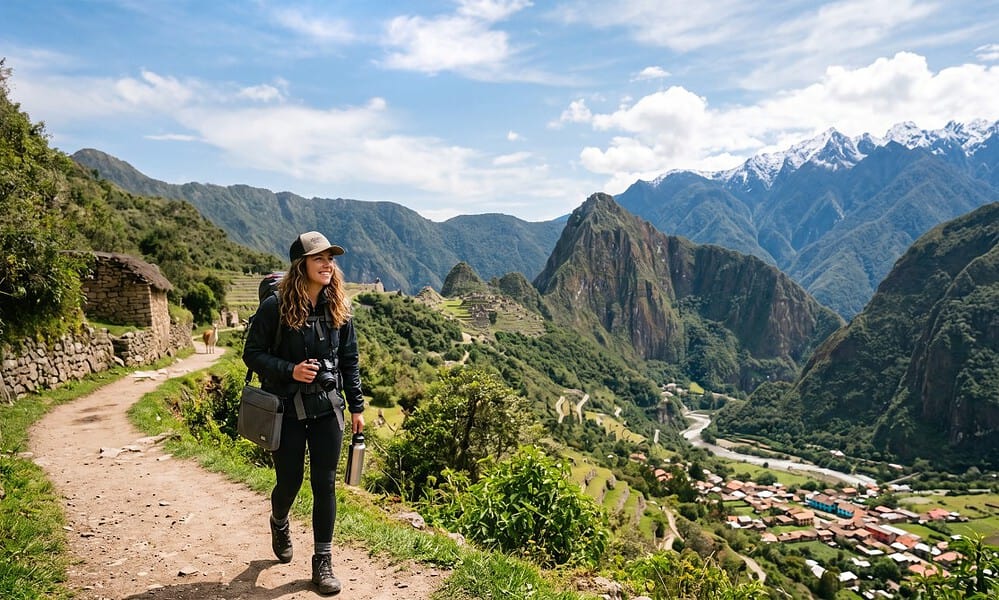
San Isidro is another good option if you want a more businesslike environment. For longer stays outside Lima, the Sacred Valley appeals to remote workers who want quieter scenery and a more reflective pace.
A background safety review notes that the Sacred Valley in Peru is considered an excellent choice for travelers seeking safer bases. That matches how many nomads use it now, as a lower-stress contrast to the capital.
Practical gear and routines
In Lima, Uber and Beat are usually easier than improvising with taxis. That’s not just about price. It’s about predictability after dinner, after airport arrivals, or when your Spanish is tired and you don’t feel like negotiating.
For instant connectivity, Ubigi is a practical eSIM option for airport arrival days. Later, many travelers shift based on local needs and coverage preferences.
Peru rewards narrow movement patterns. Pick a district, learn your routes, and repeat them until the city feels familiar.
Keep your nightlife judgment sharp. Don’t accept drinks from strangers, and don’t assume every friendly conversation is harmless. In Lima especially, discipline matters more than confidence.
Peru earns its place among the safest countries to visit in South America because it offers very livable zones for remote workers. You just need to respect the boundaries of those zones.
7. Bolivia The Ultimate Adventure on a Micro-Budget
You finish a client call in a whitewashed courtyard in Sucre, pay a fraction of what you would in Santiago or Montevideo for lunch, and then remember the trade-off. The Wi-Fi can wobble, altitude can drain a full workday, and transport judgment matters more here than in the easier South American bases.
Bolivia suits remote workers who care more about cost, texture, and real local immersion than polished nomad infrastructure. It asks more from you. In return, it gives you some of the best budget headroom on the continent and a version of South America that still feels less filtered for outsiders.
Safety in Bolivia is a neighborhood and routine question, not a countrywide yes-or-no. Recent Global Peace Index summaries have pointed to improvement over the last few years, but I would not use that as a reason to get casual. Bolivia works best for nomads who keep their movements predictable, choose their base carefully, and avoid improvising late at night.
Where Bolivia works best for remote life
La Paz can be productive if you stay in Zona Sur. Calacoto and San Miguel are the practical picks because they feel more orderly, have better day-to-day services, and are easier for first-timers than the denser, more chaotic parts of the city. They also sit lower than central La Paz, which can make your first few days a little easier if altitude usually hits you hard.
Sucre is the stronger choice for full-time work. The pace is calmer, the streets are easier to read, and the city is less tiring. If I needed to keep a reliable schedule of calls and focused work, I would start there before attempting La Paz. Spots like The English Hub have long been useful for laptop sessions, informal networking, and a few hours of stable routine outside your apartment.
Cochabamba can also work for some nomads, especially if you want a milder climate and lower stress than La Paz, but it is less established in remote work guides and requires more self-direction on arrival.
The practical realities most Bolivia roundups skip
Bolivia is cheap in the ways that matter to slow travelers. Rent, food, and intercity transport can leave you with real margin. That margin disappears fast if you book the absolute cheapest apartment, stay far from your daily routes, or lose work hours to bad sleep and unreliable internet.
That is the Bolivia equation. Spend a little more for location, warmth, and decent Wi-Fi. Save aggressively on the rest.
For connectivity, I would treat mobile data as backup insurance rather than a nice extra. Buy a local SIM soon after arrival and test your apartment internet before committing to a longer stay. Cafe culture exists, but Bolivia is not the kind of nomad base where I would build my week around bouncing between aesthetic work cafes. You want one dependable apartment, one or two known cafes, and a short list of transport options you trust.
If Bolivia becomes part of a longer regional plan, it helps to understand how neighboring countries fit into residency and tax decisions. This guide to Paraguay citizenship and residency options for long-term travelers is useful context if you are comparing low-cost South American bases.
Ground rules that keep Bolivia manageable
Use hotel-booked or radio taxis when possible. Avoid random street cabs at night, and never enter a vehicle that already has extra passengers inside. Fake police scams are a known issue, so any unexpected authority interaction should trigger caution, not compliance.
Altitude is not a side note. It can wreck your first week of output. Give yourself recovery days, keep calls light at the start, and do not assume prior experience in Mexico City or Bogotá means La Paz will feel easy.
A few habits make a big difference:
- Start with Sucre or Zona Sur: Both give you a softer landing than a more chaotic first base.
- Book your first stay for workability, not just price: Check heating, desk setup, and recent Wi-Fi reviews.
- Keep offline maps and saved addresses on your phone: Mobile signal and directions are not always reliable when you need them.
- Finish airport and arrival logistics before dark when possible: Bolivia is easier when the first 24 hours are planned out.
- Protect your work energy: Two bad nights of sleep and one weak internet connection can wipe out the savings.
If you are comparing Bolivia to other low-cost bases, this guide on the cost to travel the world comfortably gives useful context for why Bolivia appeals to budget-conscious nomads.
Bolivia belongs on a list of the safest countries to visit in South America with an asterisk. It is safer when you make disciplined choices. For remote workers who can handle a little friction, that trade can be well worth it.
8. Paraguay The Under-the-Radar Frontier for Savvy Nomads
Paraguay rarely gets top billing in travel conversations, which is part of its appeal. If you’re tired of moving through obvious nomad circuits, Asunción can feel refreshing. It’s less curated, less performative, and often easier on your budget than the region’s more talked-about capitals.
That said, Paraguay is best for self-directed travelers. You need more initiative here. There are fewer built-in nomad systems, so your quality of life depends heavily on where you stay and how quickly you establish routines.
The neighborhoods that make Asunción easier
Villa Morra and Carmelitas are the standard recommendations because they’re more convenient. They offer better access to cafes, shopping, apartments, and transport options than areas that might be cheaper but cost you time and peace of mind.
Paseo Carmelitas is useful less as a sightseeing stop and more as a marker of the surrounding zone’s convenience. If you like being able to step out and find coffee, food, and services without friction, this area makes sense.
What to sort before and after arrival
A local Tigo SIM is close to essential for communication and maps. Paraguay can feel slower and less straightforward digitally than other countries on this list, so having your own stable mobile connection matters.
Uber or hotel-called taxis are the safer standard move. I’d also recommend joining expat and local online groups before you arrive because Paraguay rewards local knowledge more than polished booking platforms do.
Here’s what usually works:
- Choose convenience over bargain hunting: Villa Morra and Carmelitas reduce daily hassle.
- Learn basic Spanish fast: It changes everything from apartment issues to ride coordination.
- Expect less coworking density: Cafes and private apartments often matter more than formal work hubs.
- Use Ciudad del Este strategically: It’s useful for errands and shopping, but not where most nomads want to base themselves.
For readers considering Paraguay as more than a temporary stop, this Paraguay citizenship and residency guide is worth bookmarking.
Paraguay is the wildcard among the safest countries to visit in South America. It won’t hand you an easy remote-work lifestyle. But if you’re adaptable, it offers space, value, and a version of South America that still feels underexposed.
Top 8 Safest South American Countries, Comparison
| Country | Implementation complexity 🔄 | Resource requirements ⚡ | Expected outcomes ⭐📊 | Ideal use cases 💡 | Key advantages ⭐ |
|---|---|---|---|---|---|
| Uruguay | Low, Digital Nomad Visa available; straightforward bureaucracy 🔄 | High ($$), top-tier internet (Antel) and reliable utilities ⚡ | Very safe, stable long-term living with predictable services ⭐📊 | Safety-first long-term remote work; premium coastal or capital base 💡 | Stability, universal healthcare, progressive policies ⭐ |
| Chile | Moderate, Digital Nomad Visa; some admin (RUT) recommended 🔄 | High ($$), modern infrastructure, excellent internet & healthcare ⚡ | First-world reliability and business-friendly environment ⭐📊 | Professionals wanting modern amenities, startups, reliable logistics 💡 | Infrastructure, safety, geographic diversity ⭐ |
| Argentina | Low-Moderate, 90-day tourist stays; visa runs common; economic volatility 🔄 | Low ($), very affordable living; good coworking but banking quirks ⚡ | Rich cultural life and strong expat community; variable economic predictability ⭐📊 | Culture-focused nomads on a tight budget; social scene seekers 💡 | Affordability, food/wine culture, large nomad networks ⭐ |
| Colombia | Moderate, Digital Nomad Visa; choose neighborhoods carefully 🔄 | Low ($), affordable with strong urban coworking; variable rural internet ⚡ | Active nomad communities, great climate and value; safety varies by area ⭐📊 | Community-oriented nomads seeking climate, coffee culture, value 💡 | Vibrant expat scene, pleasant year-round weather, cost efficiency ⭐ |
| Ecuador | Low, USD currency simplifies finances; nomad visas available 🔄 | Low ($), very affordable housing; internet and healthcare vary by city ⚡ | High value and biodiversity access; smaller nomad community ⭐📊 | Budget nature lovers, retirees, and long-stay nomads wanting USD stability 💡 | Dollarized economy, low costs, access to varied ecosystems ⭐ |
| Peru | Moderate, tourist visas common; safety is location-dependent 🔄 | Moderate ($), affordable with top-tier culinary options; variable internet ⚡ | Excellent food/cultural experiences; safe if based in upscale districts ⭐📊 | Culinary and culture-focused nomads; short-term exploration + work 💡 | World-class cuisine, tourism infrastructure, iconic sites ⭐ |
| Bolivia | High, limited infrastructure, altitude adaptation and safety concerns 🔄 | Very low ($), cheapest living costs; unreliable internet & healthcare ⚡ | Deep cultural immersion and unique landscapes but higher risk ⭐📊 | Adventure nomads on micro-budgets seeking authenticity and trekking 💡 | Lowest costs, extraordinary natural attractions ⭐ |
| Paraguay | Moderate-High, limited nomad services; language barrier (Guaraní/ES) 🔄 | Low ($), rock-bottom prices; slower internet and fewer amenities ⚡ | Off-the-beaten-path authenticity with modest services; gradual integration ⭐📊 | Self-reliant nomads seeking extreme value and cultural authenticity 💡 | Affordability, low tourism, straightforward residency options ⭐ |
Your Next Base Choosing Safety and Lifestyle in South America
The biggest mistake people make with South America is trying to answer safety at the country level and stopping there. That’s too broad to be useful. A much better question is this: where can you build a routine that feels calm, productive, and repeatable?
That’s why Uruguay stands out so clearly. It offers the least friction for people who want stability first. If your ideal month includes reliable rhythms, lower ambient stress, and neighborhoods where daily life feels orderly, it’s hard to beat. You’ll likely spend more for that comfort, but many remote workers decide it’s worth it.
Chile comes next for a different reason. It’s the best option for nomads who want strong infrastructure and a modern urban baseline. When transport is easy, rideshare culture is established, and the city feels legible from day one, work gets easier. That alone can justify choosing Chile over cheaper alternatives.
Argentina sits in the sweet spot for many people because the lifestyle upside is huge. Great cafe culture, strong neighborhood identity, and a lot of day-to-day energy make it compelling. But Argentina rewards people who stay aware. It isn’t the place to get lazy with your phone, your route home, or your housing choice.
Colombia is similar in one important aspect. The right neighborhood can make it feel welcoming, social, and highly livable. The wrong one can burn you out. For many nomads, Laureles in Medellín works better than flashier options because it supports real life, not just nightlife.
Ecuador and Peru both prove that selective travel beats broad assumptions. In each country, there are bases that work extremely well for remote life and others that add avoidable risk. Cuenca, Miraflores, Barranco, and the Sacred Valley keep coming up because they solve practical problems. You can walk, work, eat, and get home without making every day an exercise in vigilance.
Bolivia and Paraguay are different picks. They suit nomads who don’t need polished systems handed to them. Bolivia gives you authenticity and strong budget upside, but asks more from you in return. Paraguay is even more self-directed. It can be a smart base if you’re comfortable building your own framework instead of stepping into an established one.
The pattern across all eight countries is simple. Safety isn’t passive. You create a safer experience by choosing the right neighborhood, using better transport habits, carrying the right connectivity setup, and favoring secure housing over romantic but inconvenient listings. A good eSIM, a rideshare app, a work-friendly cafe, and an apartment with solid entry security do more for your daily peace of mind than generic country advice ever will.
If you’re choosing among the safest countries to visit in South America, start with your real working style. Do you want low stress and predictability. Pick Uruguay or Chile. Want culture, value, and strong city life. Look hard at Argentina. Want community and weather. Colombia deserves serious attention. Want a quieter, budget-conscious base. Ecuador, Peru, Bolivia, and Paraguay each have a version of that, if you choose carefully.
South America rewards prepared travelers. Not fearful ones. If you arrive with sharp habits, realistic expectations, and a neighborhood-first mindset, the continent opens up fast. And once it does, it’s one of the best places in the world to build a chapter that’s both productive and memorable.
Remote Tribe is a strong resource if you want more than surface-level destination advice. Explore Remote Tribe for practical guidance on visas, taxes, coliving, remote work tools, destination playbooks, and the small details that make nomad life run smoothly.