At least at one point, and perhaps you are already aware of it, you close your laptop at the end of the day and find yourself unable to recall anything that you actually enjoyed doing. The coffee was fine. The emails got sent. You attended three meetings and said something that sounded intelligent. But the day itself? Completely hollow.
This is what burnout is like when it slowly creeps in. It may not necessarily come in the form of an explosive breakdown. It is only the silent passing of all that mattered sometimes.
Remote work promised us freedom, and in some aspects it provided. No commute, flexibility, and the possibility of working everywhere. At some point in time, however, working anywhere became working everywhere, always. The office was turned into the living room. Weekends turned into deadline catch-up days. And in the mind of many, it was the very thing that consumed them as the separation between life and work was slowly eroded.
Then what do you do with all of that and put it in a totally different environment? Not that Spain is some magic cure for professional fatigue, as it is not. But can a real transformation in the way you feel, think, and recover be really brought about by altering your physical environment? The short answer is yes. The longer answer is sunshine, routine, cultural pace and one or two things that most productivity advice is absolutely blind to.
The Burnout Nobody Warned You About
The majority of the discussions concerning burnout revolve around workload. There are too many tasks, too many hours, and there is a lack of holidays. Those are real problems. However, there is one more step of isolation burnout that is never brought up as far as remote workers are concerned. Environment burnout. The type that comes from doing too many things at the same place, in the same manner, with the same four walls looking back at you.
At least in an office there would be a commute to break the day. Lunch with a colleague. Different buildings, change of weather, another person quarrelling outside a kebab store. Small interruptions. Minor neurological changes that stimulate your brain and stop it going flat. Working remotely takes all that away. Your surroundings get stale and once one gets used to it in months or years, your brain begins to think that each day is the same. Motivation is not something that falls. It vanishes.
This is not a discipline problem. It will not be fixed by downloading a different focus app. It is an issue of stimulation, and a change of scenery ceases to be a luxury and becomes an acceptable method of recovery.
Why Spain, Specifically?
You could go anywhere. Bali, Lisbon, Thailand. But Spain has one more element that most destinations popular with digital nomads lack, and that is a culture that is actively opposed to the always-on way of life.
Here people have another clock. Lunch is not a depressing sandwich at your desk at twelve thirty. It is a two, three-course lunch and no one is in a hurry. Dinner happens at nine or ten. In the evening, the streets are crowded as it is only natural to walk around and be outside. To someone who has been brought up in a culture where productivity is the utmost moral value, a two-hour lunch is almost criminal. That is precisely the point of that rebellion. It compels you to go slow like no meditation app can.
According to Rachel Porter, a travel writer at SolidEssay, “Spain receives an average of 2,500 to 3,000 hours of sunshine annually. That is compared to the UK at approximately 1,400 hours.” This is more than many would believe. Sunlight controls your circadian timing, increases serotonin and has a direct influence on your sleep quality. Unless you have been working remotely in a grey climate under artificial light, there is a likelihood of your body running on neurological fumes.
Go somewhere you can count on sunshine and things change quickly. You start sleeping better. Your mood stabilises. Morning energy literally comes without having three espressos to get to morning. The latter is not any hard science. We simply have the tendency to overrule the influence of our physical surroundings on our mental state, and the most straightforward evidence of this is sunshine.
Cost of Living and the Stress Equation
Burnout is nourished by financial stress. The fact that money goes much farther is one of the practical benefits in Spain and especially in the areas that are not in large cities. In Valencia, a nice flat could be half as expensive as it would be in Amsterdam or London. Even a three course lunch with a beverage can cost less than twelve euros. Groceries, wine, even healthcare – all more affordable.
You also ease one of the largest background pressures that contribute to burnout by reducing financial strain. You are no longer counting all your purchases. You no longer feel the urge to take up an extra job to be able to survive. Breathing room alters your attitude towards every day.
Practical Advice for Making the Move
Pick the Right City for Your Speed
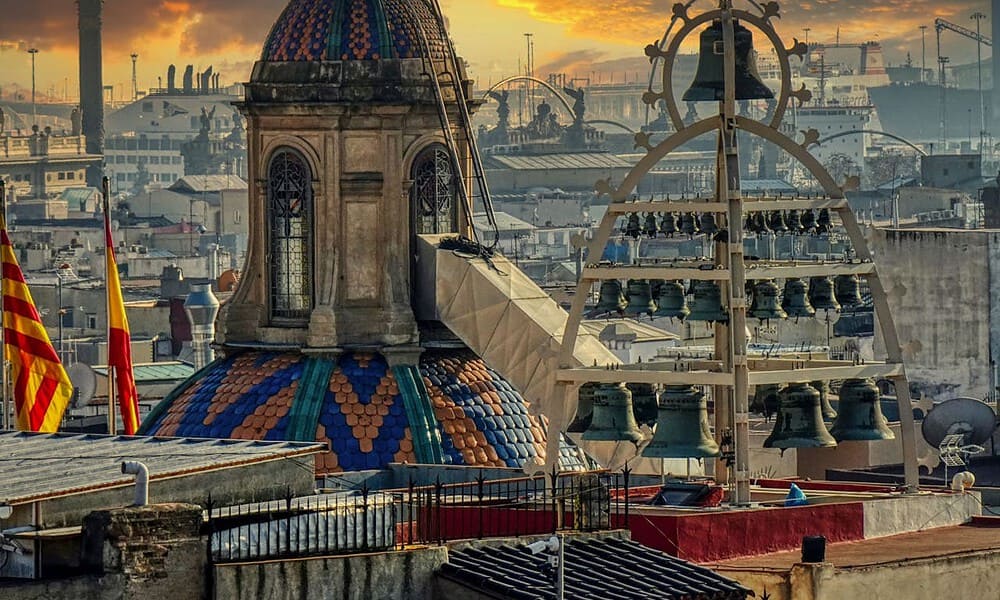
Spain is not one thing. Barcelona is busy, global, and full of telecommuters. Superb with community and nightlife, yet it can recreate the same rate that you were attempting to flee from. Valencia is in a perfect spot — it is cheaper, there are many coworking centres, the old town is beautiful, and there is a beach right in it. Malaga has been developing as a technology center and the weather is great all year round. Smaller destinations such as Alicante, Granada, or the Canary Islands offer a more affordable and slower pace.
Tell the truth about what you really need. When you are burned out, making the most exciting choice in the city is likely not to be a very good decision. You need a quieter place to rest.
Sort Your Visa Situation Early
Spain’s digital nomad visa provides up to a year of legal stay for a remote worker, with a renewal option. These conditions are the ability to demonstrate that you work in a company or for clients located outside of Spain and a sufficient level of income. It is time-consuming; it involves paperwork, and hence it should be started well before you intend to relocate. As an EU citizen, it is, of course, much easier, but even in this case, it is good to get your NIE number, open a local bank account, and get registered with the local health system accordingly.
Build Routine Before You Arrive
The greatest trap that people fall into is to make relocation like a holiday. Two weeks of tourism and nights out, and then all of a sudden your inbox is messed up. You have to decide your working hours before you land. Research which coworking space to use. Have a morning routine drawn up. The idea here is to alter your surroundings, but not to do away with any organisation. Formality makes remote work a possibility. You simply desire to be better organised in a better location.
Protect Your Recovery Time
Easy to forget, this one. You go to Spain to refresh, and then you spend every night and weekend with something new since you are in a new environment, and everything is new. After 3 weeks, it is just like when you were tired, only you are tired with a tan. Guard your downtime. Have nothing to do at least two evenings a week. Let yourself be bored. Sit in a square, have a coffee and see people pass by. Read a book which is unrelated to productivity. The recovery occurs in the intervals and not in the actions.
Subscribe to our Newsletter
Get The Latest News On Digital Nomad Lifestyle, Remote Working Communities
And Much More.
100% spam free. We never share your email address. Unsubscribe anytime!
The Things That Actually Change
Something interesting begins to happen after a few weeks in a new environment, once the novelty has calmed down. You start realising what has been lacking. Perhaps you are aware that you have not been out to eat a meal in months. Or that you are unable to recall when you last walked out somewhere with no aim. Or that the strain in your shoulders, the thing that you thought was merely normal, is gone. These are minor physical movements, which make a difference. It is your body talking to you as it was working under a stress that you no longer noticed. There is a change of environment and especially more relaxed conditions and favourable weather, where your nervous system is allowed permission to relax. Moments like these are often what people later choose to preserve, whether privately or through meaningful experiences documented by photographers living and working in Spain, such as Gnatenko Photography.
Your Relationship with Work Shifts
This is one of the things that no one talks about. Most work habits turn out not to be about productivity when you move out. They were about anxiety. Having to check email at ten at night was not necessitated by the job. It was intolerable to sit without doing anything.
During Spain and its late dinners and long evenings, you find yourself in a scenario where nothing is absolutely out of order, so you do nothing. Slowly, your nervous system transmits that you may cease. That does not make you lazy. Your working time is keener when you are well rested. You think more clearly, make decisions quicker, and the fog clears. Fewer hours of work, much higher outcomes.
Community Happens Differently
Remote work loneliness does exist, and relocating to a new country will only increase it unless you are cautious. Social connections are not so hard in Spain.
Most Spanish cities have vibrant coworking places. Language exchanges are common. And the very culture is naturally sociable, community-oriented, and communal in eating. It is not necessary to know Spanish to build a network, but a basic understanding will do wonders. Even those simple day-to-day interactions, ordering coffee, chatting with a shopkeeper, and saying hello to your neighbors, give you a feeling of belonging that will never be achieved when you sit alone in your flat. This slower, more communal approach to life is also visible in how people celebrate milestones here, something reflected in destination weddings across Spain, as seen through work like Gnatenko Weddings.
When It Does Not Work
Pretending a change of location will fix everything is unrealistic. No sunshine will cure a toxic job-related burnout. In case your job is really unsustainable, a relocation to Spain only entails being overworked in a more scenic environment. Relocation should not replace therapy if you need professional mental health support.
A change of location is best with an environmental and habitual burnout. When you are stuck in a loop. When you are in the calcified state of your routines, the issue is not so much what you are doing but what is the setting of what you are doing. It is there where a new environment can really disrupt the trend. Be honest about what you are carrying with you. There is baggage that can fit in a suitcase and baggage that cannot.
Coming Back, or Not
Others spend a few months in Spain and go back to the country rejuvenated. Others never go back. They are both highly legitimate results. It is not necessarily the place that you go to, but what you discover about yourself there that counts. That you need much less stimulation to be happy than you imagined. Long lunches do really make you more productive. The sunshine is not a luxury; it is a necessity to your well-being. That ambition was never really yours to begin with.
Such realizations come with you. The insight remains, whether you continue to make your home in Valencia, or go elsewhere altogether, or go home with a whole new philosophy of your days.
The Bottom Line
Burnout thrives on sameness. It lives off routine, work without limits and the constant work setting. The conditions of remote work are accidental, which makes it perfect even with all its freedom.
Spain is not a miracle cure. Nowhere is. Yet it has one thing that is truly good, a culture that is not obsessed with productivity, a climate that suits your biology, a cost of living that is less stressful and a pace of life that reminds you what it is like not to be in a hurry.
If you are sitting at your desk looking at the same wall you have been looking at over the past two years, and you have not felt excited anymore, then perhaps you would ask yourself a simple question. What if the problem is not you? What if it is the room?
At times, the boldest thing you can do is shut the laptop, grab a bag, and see.
If you want to become a digital nomad or find your crew, sign up for our free newsletter and get upcoming articles straight to your inbox!
We’ve got some great content on our Instagram and on our Facebook Group too where you can network with other nomads from all over the world.
Your Travel Resources Handy In One Place 🗺️
🧳 Travel Insurance
Enjoy peace of mind during traveling and don’t leave your country without good travel insurance. We recommend Insured Nomads or Genki for international travel insurance.
💰Travel Finances
Get your travel finances smart and straight with Wise or Revolut.
🏨 Accommodations
For a short stay check out Booking or Agoda. Staying longer? Take a look at the offers at Airbnb. Hostels are the cheapest option that you can explore at Hostelworld.
🏡 Recommended places for long-term stay
Wanna know the accommodations where we lived during our digital nomad journey? Check out the places we enjoyed the most!
🎫 Book tours
Are you up for taking part in epic guided tours? Book ones you like using GetYourGuide or Viator.
🚗 Rent a car
To find great rental car deals check out Rental Cars and get ready for your car trip!
Julia is a photographer based in Spain and the founder of Gnatenko Photography. She specializes in family, maternity, couple, and portrait photography, and loves capturing real, emotional moments that tell a story. When she’s not behind the camera, she enjoys writing about travel, creativity, and everyday inspiration. You can follow her work on Instagram at @gnatenko_photography.










[…] Remote Work Burnout and the Spanish Reset: Can Location Really Change Your Energy? […]