People’s careers and daily lives have changed completely because of remote work. Remote workers no longer have to work in the same place every day. Instead, they can choose how to plan their day, how to set up their space, and how to balance work with their own health. But this flexibility is strong; it also comes with problems that many remote workers don’t see coming.
Working from home sounds great at first, but then it gets boring. It can feel like productivity is flat. Creativity can go away. The walls can start to close in on you. Burnout slowly gets worse. Even people who love working from home often find that where they work affects their energy more than they thought it would. Many people who work from home travel in RVs to change their surroundings. Some even look into managed RV rental programs like the ones offered by RV Management USA so they can get reliable rigs and help while they work from the road.
That’s where RV travel really comes into play. Few lifestyles can match the comfort, stability, mobility, and immersion in nature that RV living offers. It gives people who work from home access to things that modern life often hides: open space, silence, beauty, and the ability to change their surroundings whenever they need to clear their head.
After spending years with RV travellers, renters, and full-timers, I’ve seen how the RV lifestyle has changed the way people think, feel, and work. This isn’t just a trend in travel. It is a way to improve your health, a creative way to get back to work, and in many ways, a better way to work from home.
This guide explores how RV travel can help digital nomads recharge, stay productive, spark their creativity, and establish a long-term lifestyle on the road that suits them. You will also find trusted, high-authority RV resources, safety guidelines, campground directories, maintenance references, and planning tools throughout the article to help you on your trip.
Table of Contents
Why RV Travel Is One of the Most Sustainable Nomad Lifestyles
Living in an RV helps remote workers with problems like boredom, sameness, digital fatigue, and the messiness of modern life. It doesn’t take away your responsibilities; instead, it changes the way you handle them completely.
A common myth about burnout is that it happens when you do too much. In reality, the opposite is usually true. Burnout happens when you do the same thing in the same place for too long without enough new things, movement, or changes in your senses.
Living in an RV breaks that cycle in the best way possible.
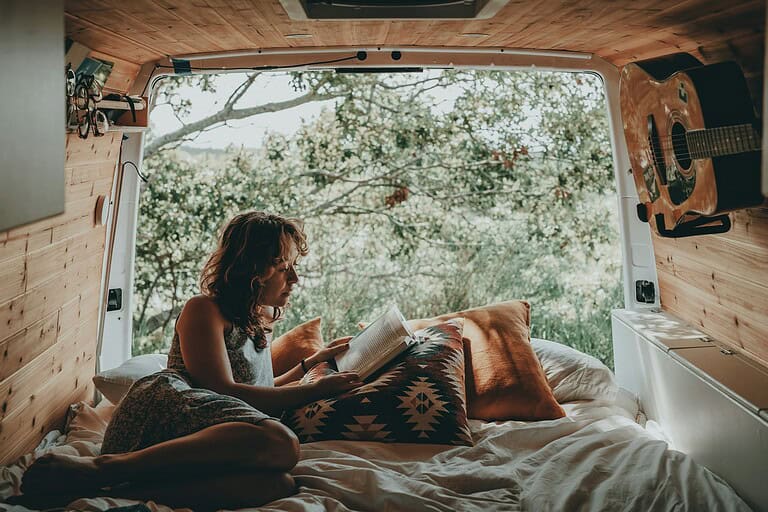
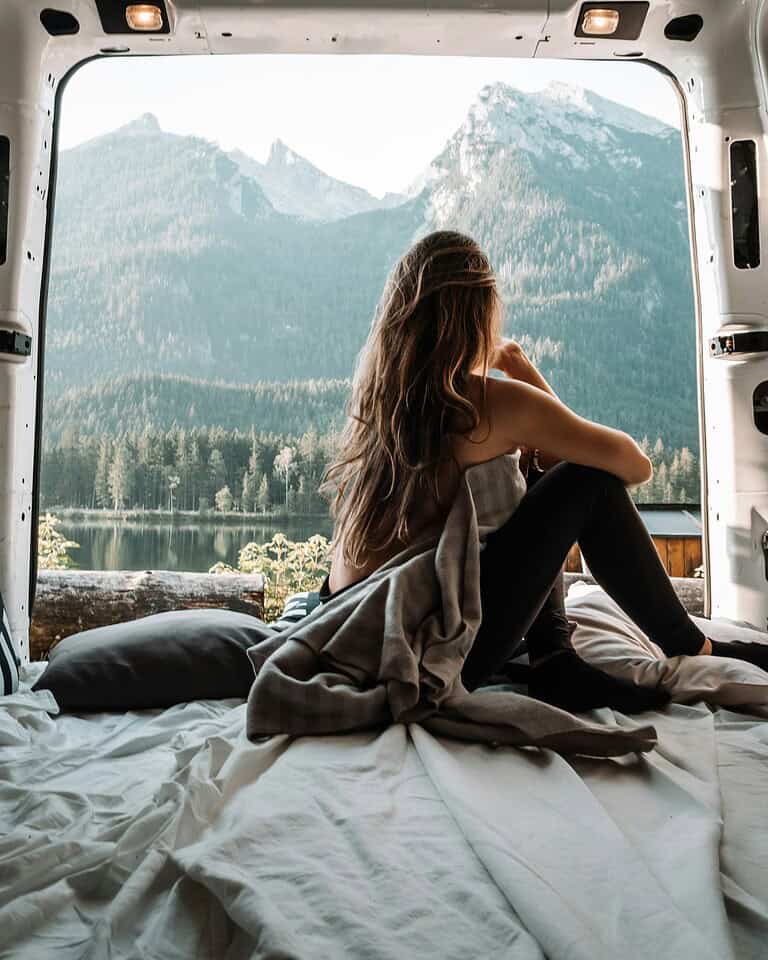
You can stay in one beautiful place for weeks or move around whenever you want. One month you can work in a mountain town, and the next month you can work at a campground by a lake. You can hold meetings or take client calls under pine trees with a river in the background. Living in an RV keeps your mind and senses awake and fresh.
The Go RVing travel guide has routes, campground ideas, and road trip ideas that can help you plan your ideal rhythm.
You Control the Pace Instead of Being Dragged by It
Traditional travel often forces you into a fast-paced routine of packing, unpacking, catching flights, and rushing between destinations. While fun for vacations, this pace is not sustainable for remote work.
RV life slows everything down.
You:
Pick when you want to leave
Pick how long you stay
Pick the kind of environment you want today.
Decide how much you want to move or stay still
There is no rush, no stress, and no outside schedule pushing you. You set your own pace, which is important for your mental health and creativity.
Nature Becomes Part of Your Daily Work Routine
Modern life often distances us from nature without us even noticing. Most remote workers spend their days indoors, staring at screens, surrounded by artificial lighting and digital noise. RV travel flips that script.
Suddenly, nature becomes your co-worker.
You hear birds while answering emails.
You smell pine while writing reports.
You see mountains, lakes, or deserts outside your windows.
Outdoor immersion is proven to lower anxiety and increase creative thinking. It also reduces mental fatigue, helping you stay more focused and effective.
Stability Meets Freshness, A Rare and Healthy Combination
The main problem with most digital nomad lifestyles is that they are not stable. Changing places to stay all the time can make it hard to sleep, work, and think clearly.
What makes living in an RV different is:
Your house stays the same.
Your bed stays the same.
Your work area stays the same.
Your daily routines stay the same.
But the world outside your door changes whenever you want.
Few lifestyles can match this mix of stability and newness for emotional health.
Subscribe to our Newsletter
Get The Latest News On Digital Nomad Lifestyle, Remote Working Communities
And Much More.
100% spam free. We never share your email address. Unsubscribe anytime!
How RV Life Naturally Reduces Burnout for Remote Workers
Most of the signs of burnout come on slowly, like tiredness, irritability, feeling disconnected, low motivation, and a lack of creativity. They often come from the environment being stuck, not the workload.
Traveling in an RV stops burnout before it gets worse.
A New Environment Resets Your Brain Instantly
People aren’t made to look at the same walls all the time. Your mind changes when you change your physical environment. This benefit is available to you right away when you live in an RV.
You can work by a lake one day and then move to a forest the next if you need more peace and quiet. A short drive between campgrounds can help you get out of your head and come up with new ideas.
Campgrounds near beautiful landscapes are easy to find onRecreation.gov, which offers thousands of RV-accessible locations.
Downtime Happens Naturally Instead of Feeling Forced
Downtime Happens Naturally Instead of Feeling Forced
Remote work makes it easy to blur the lines between “home time” and “work time.” RV life creates separation without effort.
Your day is filled with gentle pauses:
Setting up a picnic table as a workspace
Stretch your legs on a quick trail.
Cooking outdoors
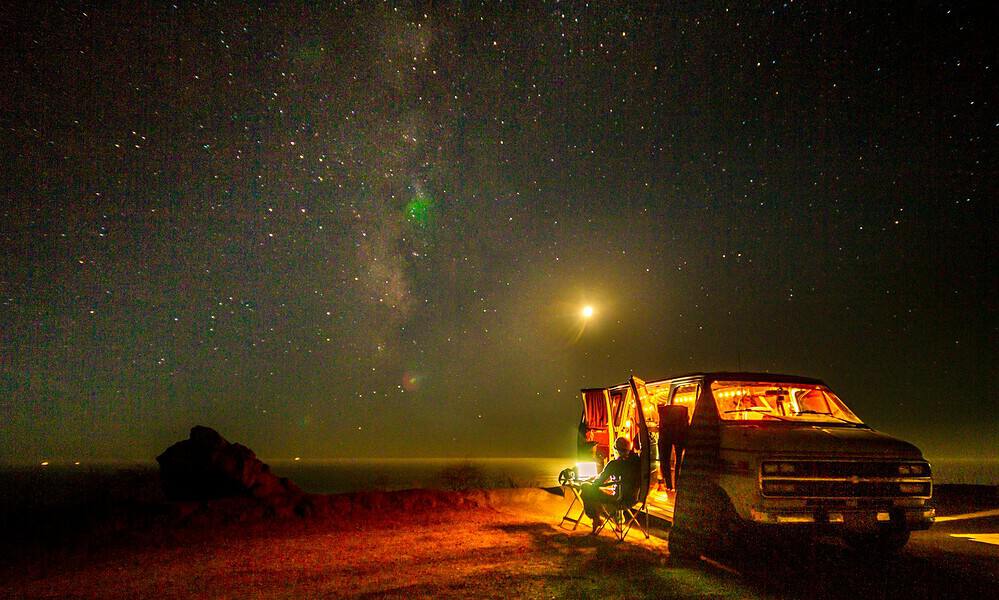
Watching the stars instead of Netflix
Hearing the wind instead of traffic.
These natural breaks reset your nervous system throughout the day.
Digital Noise Becomes Optional, Not Constant
When you need it, RV parks can give you strong WiFi, but you can also choose to disconnect. Boondocking gives you peace and quiet and room to relax on the weekends. Campendium’s cell coverage map can help you find a campground with good service if you need full connectivity.
Before boondocking, read the BLM’s rules for dispersed camping to learn how to camp safely and responsibly off the grid.
The Hidden Psychological Benefits of RV Travel for Remote Workers
People often assume RV travel benefits remote workers simply because it looks peaceful or adventurous. While those qualities matter, RV life’s deeper power comes from its alignment with core psychological principles that support mental health, motivation, and creative thinking. Once you understand these principles, it becomes clear why RV travel helps digital nomads avoid burnout and maintain long-term productivity.
One of the most immediate psychological benefits is the reduction in sensory overload. Modern life bombards you with noise, screens, notifications, and constant stimulation. Even when you love your work, this overstimulation keeps your brain in a state of quiet tension that drains energy. Many remote workers feel exhausted not because of their workload, but because their environment never gives their minds a chance to rest.
Nature changes that dynamic instantly. When you spend time outdoors, your brain shifts into what researchers call soft fascination. Natural environments capture your attention gently without demanding it. A quiet forest, a flowing river, or a wide desert horizon allows your mind room to breathe. Without the constant pull of artificial stimuli, your mental energy stabilizes. You feel calmer, clearer, and more grounded. RV travel places you inside these restorative environments every day, not just when you take time off.
RV life also restores a sense of autonomy that many remote workers do not realize they have lost. Even without commuting, people often arrange their entire lives around digital obligations. They follow the same loop of waking up, logging in, working, eating, scrolling, and sleeping. Over time, their everyday routine dulls their sense of personal agency.
Autonomy is essential for motivation and emotional resilience. RV travel gives it back. You decide where to wake up, how long to stay somewhere, what landscapes you want around you, and whether you need quiet forest energy or mountain air today. This ability to choose your environment creates a psychological shift where work feels integrated into your life instead of dominating it.
Another major benefit is environmental novelty. Novelty triggers dopamine, which fuels motivation, curiosity, and problem-solving. In a static home environment, novelty fades, and dopamine levels drop. That monotony can lead to stagnation and burnout. RV travel introduces fresh stimulation in gentle, manageable doses. A new trail, a different sky, a new campground neighbor, or a new town layout keeps your mind engaged without overwhelming it. Because your RV remains the same familiar home, you get novelty without instability, which is ideal for deep, focused work.
RV life also addresses one of the biggest emotional challenges for remote workers: loneliness. Working from home can create isolation, and solo travel can amplify it. RV travel, however, attracts a warm and naturally social community. People talk around campfires, share tips at picnic tables, go for hikes together, and build friendships that are simple, genuine, and free of professional pressure. These small but meaningful connections protect against emotional exhaustion and create a sense of belonging that remote workers often miss.
Living on the road also develops resilience through problem-solving. RV life occasionally presents challenges such as leveling your rig, fixing a loose connection, or adjusting to new road conditions. These moments build confidence and adaptability. You learn to handle small issues calmly rather than feeling overwhelmed. This advantage translates directly into remote work. People who are comfortable navigating unexpected situations tend to manage deadlines, communication challenges, and project shifts with far less stress.
Another overlooked benefit is the increase in physical movement. Home-based work often leads to hours of sitting without breaks, which affects energy, mood, and cognition. RV living naturally encourages movement. You walk more. You stretch more. You explore campgrounds, maintain your setup, or hike nearby trails. Even small bursts of activity reduce cortisol, increase blood flow, and improve mental clarity. Remote workers who switch to RV life often report feeling physically healthier and more energized within weeks.
Finally, RV travel encourages mindful living. When life slows down, and nature becomes your backdrop, your senses awaken. You notice things you normally overlook, such as the way light filters through trees, the smell of rain on dirt, or the movement of shadows across mountains. These subtle sensory experiences help regulate your nervous system and create emotional balance. The more grounded you feel, the better your work becomes. Creativity flows more easily. Problem-solving feels less stressful. Your thoughts become more spacious and intentional.
The psychological benefits of RV travel accumulate over time. They build a lifestyle that is calmer, more present, and more aligned with your natural rhythms. When paired with practical routines and reliable connectivity, RV life becomes more than a travel method. It becomes a supportive, therapeutic environment that nurtures your productivity and well-being.
Many full-time RVers talk about meeting some of their closest friends on the road. These friendships are based on shared experience, openness, and presence. They are not transactional or career-driven. This sense of connection reduces stress, strengthens resilience, and makes remote work feel more balanced. For travelers seeking even more structure, organisations like theEscapees RV Club host meetups, training sessions, and community events for all types of RV nomads. RV travel is one of the best lifestyle choices for remote workers who want to feel clearer, inspired, and emotionally balanced. It gives you room to breathe, lets you choose where you want to be, and gives you daily access to places that are good for your mind and body.
How RV Travel Boosts Creativity and Improves Work Quality
Creativity doesn’t grow in boredom. It does well when it has freedom, new things, movement, and room to think. Living in an RV naturally gives you these things.
New Landscapes Create New Ideas
Working outside is magical in some way. Your thoughts change when your surroundings do. The tasks you do may stay the same, but the energy you bring to them is very different.
You can use Go RVing’s route finder to find beautiful, work-friendly routes that help you stay creative.
You Can Build Your Ideal Workstation Anywhere
RV workers learn how to design portable, useful workspaces:
Flow State Comes More Naturally in Quiet, Inspiring Environments
Flow requires two things:
focus
peace
Both are possible in RV life. Being in nature calms your nervous system, which makes it easier to focus deeply. Remote work is more fun and productive when there are no interruptions from the office, city noise, or places that drain your energy.
The Practical Side: How Remote Workers Stay Productive While Traveling
RV travel is great, but you need to plan ahead and be ready. People who work from home and travel a lot make systems that help them stay consistent, comfortable, and stable.
Choosing the Right Rig for Long-Term Work
Your RV is not just a vehicle. It is your office, your home, and your creative studio. Choosing the right one matters.
Class C Motorhomes: The Sweet Spot for Comfort and Mobility
Class C RVs come with:
Big rooms inside
Sleeping areas just for you
Actual kitchens
Stable work areas
Good driving
They are one of the most popular options for people who work from home. For help, look at the Go RVing Class C overview.
Travel Trailers: Maximum Flexibility for Explorers
Travel trailers let you unhook and explore freely if you already have a tow vehicle. These are great for people who want to drive smaller cars into town or on hiking trails.
Read the RV Travel towing safety guide to learn about weight, hitching, and safe towing before making a decision.
A broken water pump or low tire pressure can ruin your whole day at work. You don’t have to be a mechanic, but knowing the basics can help a lot.
The FMCA RV maintenance library is a trusted source for preventive care.
Finding Work-Friendly Campgrounds
Your location determines your work performance. Remote workers look for:
reliable internet
quiet spaces
shade for daytime work
clean facilities
proximity to nature
To find strong connectivity, travelers rely on Campendium’s coverage reviews. For nature-focused stays, exploreRecreation.gov campgrounds.
Building a Sustainable Work Routine on the Road
Living in an RV doesn’t mean working less. It’s about doing a better job. A routine that helps you be clear, present, and take meaningful breaks is the key.
Use Movement as a Creativity Tool
If you’re feeling stuck, go somewhere new. Moving your body resets your brain. Moving to a new place, even for a short time, can greatly improve your ability to concentrate.
Create a Morning Ritual That Grounds Your Mind
Examples include:
Making coffee outside
Going for a short walk on a trail
Reading on the picnic table
Stretching outside
Writing in a journal before turning on your laptop
These easy habits set the tone for your day with purpose and peace.
Maintain a Consistent Workspace
A stable workstation helps your brain connect that space with concentration. A lot of RVers choose:
A set workspace for the dinette
A desk that can turn behind the driver’s seat
A platform for a standing desk
A desk that folds out outside on warm days
Consistency keeps you from getting tired of making decisions. One thing is certain, whether you start with a weekend rental, a month-long trial, or a long-term lifestyle:
The road has a way of giving remote workers exactly what they need, including space, perspective, and a renewed sense of possibility.
If you want to become a digital nomad or find your crew, sign up for our free newsletter and get upcoming articles straight to your inbox!
We’ve got some great content on our Instagram and on our Facebook Group too where you can network with other nomads from all over the world.
Your Travel Resources Handy In One Place 🗺️
🧳 Travel Insurance
Enjoy peace of mind during traveling and don’t leave your country without good travel insurance. We recommend Insured Nomads or Genki for international travel insurance.
💰Travel Finances
Get your travel finances smart and straight with Wise or Revolut.
🏨 Accommodations
For a short stay check out Booking or Agoda. Staying longer? Take a look at the offers at Airbnb. Hostels are the cheapest option that you can explore at Hostelworld.
🏡 Recommended places for long-term stay
Wanna know the accommodations where we lived during our digital nomad journey? Check out the places we enjoyed the most!
🎫 Book tours
Are you up for taking part in epic guided tours? Book ones you like using GetYourGuide or Viator.
🚗 Rent a car
To find great rental car deals check out Rental Cars and get ready for your car trip!
Andrew Williams is the Founder of Remote Tribelife, an online magazine for digital nomads and remote working. Andrew has an extensive background in SEO and content marketing. His experience with digital marketing goes back to his early age in University when he founded a blog about startups and funding. He does his best writing in the coffee shops in Bali or in the condos of busy cities like Bangkok and Singapore. He is currently based in Singapore. You can connect with Andrew on his Linkedin profile and/or follow Remote Tribelife on Instagram.