Others arrive at a place and immediately want to explore. As soon as the first weekend approaches, they want to experience as many things as possible – plan everything through in best possible detail, so that they don’t miss anything.
While I’d call this behavior “good tourist”, I am a bad one. (Even maybe a VERY bad one.)
Because after 50+ countries visited, I travel differently. And I know that this actually applies to more nomads than you’d think.
But what’s different? I wanna explore and experience the vibe.
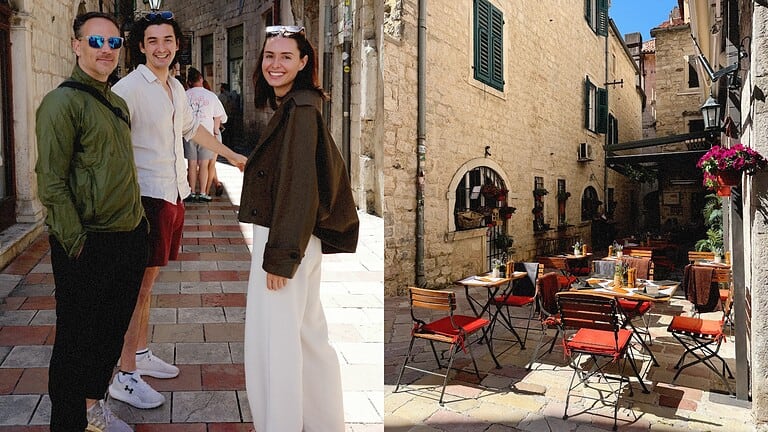
I’m all about a Sunday city stroll with good convos, good food and my face in the sun.
And yes, you could say, “But then you could be anywhere in this world; the monuments make the place.“
Which is a sentence that I definitely heard before when someone asked me:
“Did you go to (insert specific sightseeing location one at specific place)?”
“Oh no? But then you surely went to see (insert another sightseeing location at a specific place)?”
“NO? Oh, girl, what have you seen then?” Well, a lot. But different things from typical sightseeing stops.
I personally think the people make the place. (And the food & wine, maybe). 🌞
Looking back on countless travel stories, not a single one is tied to a specific monument or tourist trap.
(Apart from driving into a bush in Bagan, Myanmar and then seeing the most incredible sunset from an old pagoda… But that’s another story.)
I’m sure you get what I mean. Or maybe not, but hey, that’s also okay!
Either way, I’m almost 100% certain we can agree on the following:
The place you stay, the people you are surrounded by, and the food you nourish your soul with are what truly make a place.
Which is exactly why Montenegro caught me off guard.
I didn’t find Nomio through an algorithm or a curated travel list.
I found it through my dear friend Terry.
Terry and I have crossed paths six times now across three years of nomadic life – sometimes planned, sometimes pure coincidence. That’s the thing about building friendships on the road: they don’t fade the way people expect them to. They just pick up wherever you left them, in a different country, with better wine.
He’d found Nomio and sent me a message.
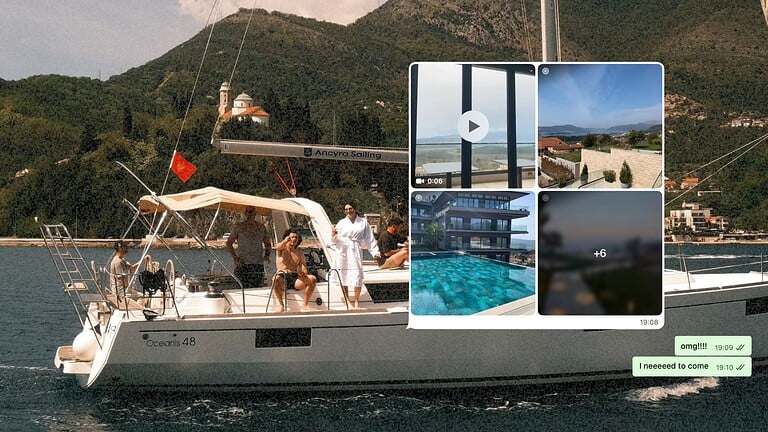
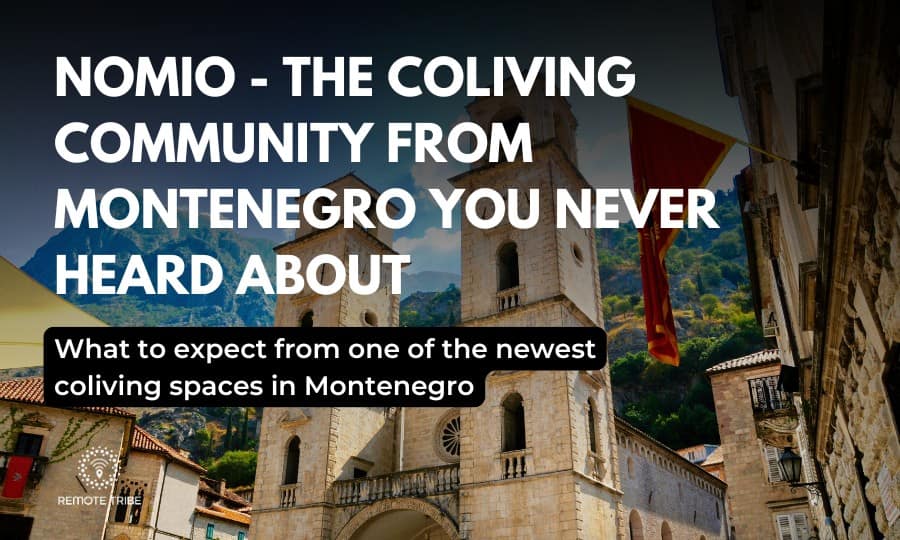
Few weeks later, I found myself on a boat in Kotor bay with Terry and all the other Nomio members that decided to join this amazing day.
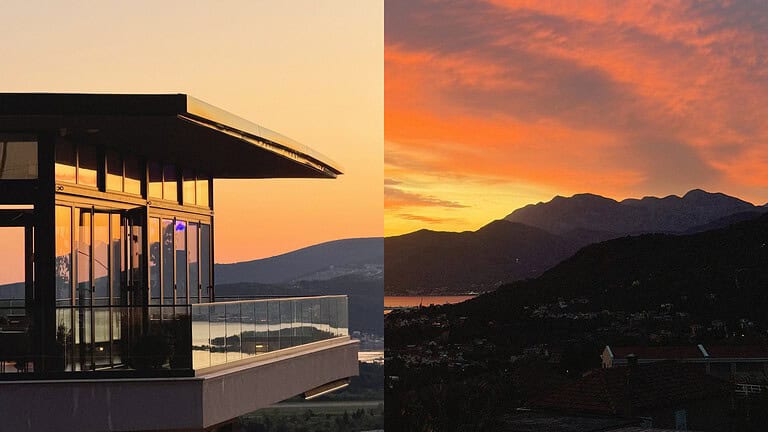
To be fair here, the pictures spoke for themselves and didn’t take much to convince me.
Plus I knew I was gonna be surrounded by at least one person I already knew.
What Nomio actually is
Nomio is a coliving and coworking space in Montenegro – and it’s genuinely one of the best ones I’ve stayed at.
The aesthetic? Also top. But that’s not the point. It’s because it got the basics right in a way that many places still don’t.
Modern rooms with a proper kitchen. Dishwasher. Washing machine.
A sauna, a pool, a gym.
All included. Starting at 500€ a month.
Let that sink in for a second.
At that price point, most places in Europe give you a room with a shared bathroom and kitchen. Nomio gives you the kind of setup where you could actually live for several months.
If you want to become a digital nomad or find your crew, sign up for our free newsletter and get upcoming articles straight to your inbox!
We’ve got some great content on our Instagram and on our Facebook Group too where you can network with other nomads from all over the world.
The part that matters most: the people
I’ll be honest. The infrastructure sold me. The community kept me.
Nomio plans activities regularly. Really cool ones that actually bring people together. And when you’re moving every few months, that matters more than any pool or sauna ever could.
As a bad tourist, I don’t need the best sightseeing itinerary. I need a table where good conversations happen. I need people who are also building something, working on something, moving toward something.
Montenegro gave me that backdrop. Nomio gave me the people.
Why this place works for the way I travel
Three years in, I’ve learned something about slow travel: the quality of a stay is rarely about the destination on the map.
No, what really matter is whether you feel at home fast enough to actually do your best work and live your best days – before it’s time to move on again.
And while I write those words, the first members of the April Nomio family already left. Because we’re not only bad tourists. We’re also bad at staying in one place for long.
BUT we will be back!
If you’re reading this and think “damn, that sounds so cool!”, you have two options:
Save your spot for the next season, beginning in October 2026 here
Save your spot for next April, as many of us will be gathering at Nomio again.
Big (extended) reunion I hear?
Yes please.
See you when I see you,
Xx Linda
Subscribe to our Newsletter
Get The Latest News On Digital Nomad Lifestyle, Remote Working Communities
And Much More.
100% spam free. We never share your email address. Unsubscribe anytime!
Montenegro has become one of Europe’s rising destinations for remote workers looking for a mix of affordability, nature, and Mediterranean lifestyle. Compared to more crowded nomad hubs like Portugal or Croatia, Montenegro still feels relatively undiscovered while offering beaches, mountains, historic towns, and a relaxed pace of life.
The country is especially attractive for digital nomads who want European infrastructure without Western European prices.
How to Get to Montenegro
Getting to Montenegro is relatively simple from most European countries. The two main international airports are:
Tivat Airport — ideal for the coastal towns
Podgorica Airport — better for central Montenegro
During summer, there are many direct seasonal flights from across Europe. Outside the high season, many travelers also enter by bus or car from nearby countries like Croatia, Serbia, Bosnia, or Albania.
Montenegro is not part of the EU, but it uses the euro as its currency, which makes life easier for many remote workers.
Digital Nomad Visa in Montenegro
Montenegro introduced a digital nomad residence permit aimed at remote workers employed by companies outside the country.
The visa can allow remote workers to stay for up to two years, with potential renewals. Requirements generally include:
Proof of remote employment or freelance work
Stable monthly income
Health insurance
Proof of accommodation
Clean criminal record
Income requirements are commonly reported at around €1,350+ per month, although official figures and requirements can change over time.
For many non-EU citizens, this creates a much easier long-term stay option compared to standard tourist visas.
Cost of Living in Montenegro
One of Montenegro’s biggest advantages is affordability.
Outside the busy summer season, digital nomads can often find:
One-bedroom apartments: €400–700/month
Coworking spaces: €100–200/month
Restaurant meals: €6–15
Coffee: €1.50–3
Monthly gym memberships: €30–50
A comfortable digital nomad lifestyle usually ranges between €1,200–1,800 per month depending on the city and lifestyle.
Coastal towns become significantly more expensive during July and August, especially Kotor and Budva.
Best Places for Digital Nomads
Kotor
Kotor is the most popular choice among digital nomads thanks to its beautiful bay, historic old town, and growing international community. It is quieter than Budva and ideal for people looking for scenery and slower living.
Budva
Budva offers more nightlife, beach clubs, restaurants, and social life. It attracts younger travelers and short-term nomads, especially during summer.
Podgorica
The capital city is less touristy and more practical for long-term living. Rent is cheaper, and daily life feels more local and business-oriented.
Tivat
Tivat has developed rapidly thanks to Porto Montenegro, bringing modern cafés, restaurants, luxury apartments, and an international crowd.
Expat and Digital Nomad Community
Montenegro’s expat scene is smaller than in Lisbon, Bali, or Chiang Mai, but it continues to grow every year.
Most remote workers connect through:
Facebook groups
Telegram communities
Coworking spaces
Coliving programs during summer
The atmosphere is generally relaxed and community-oriented. Many nomads describe Montenegro as safe, peaceful, and easy to settle into.
Internet and Coworking Spaces
Internet quality in Montenegro is generally reliable in major towns and cities. Most apartments, cafés, and coworking spaces offer speeds suitable for video calls and remote work.
Coworking spaces are still developing, but places like Kotor, Budva, and Podgorica now offer several remote-work-friendly cafés and flexible workspaces.
Your Travel Resources Handy In One Place 🗺️
🧳 Travel Insurance
Enjoy peace of mind during traveling and don’t leave your country without good travel insurance. We recommend Insured Nomads or Genki for international travel insurance.
💰Travel Finances
Get your travel finances smart and straight with Wise or Revolut.
🏨 Accommodations
For a short stay check out Booking or Agoda. Staying longer? Take a look at the offers at Airbnb. Hostels are the cheapest option that you can explore at Hostelworld.
🏡 Recommended places for long-term stay
Wanna know the accommodations where we lived during our digital nomad journey? Check out the places we enjoyed the most!
🎫 Book tours
Are you up for taking part in epic guided tours? Book ones you like using GetYourGuide or Viator.
🚗 Rent a car
To find great rental car deals check out Rental Cars and get ready for your car trip!







[…] Nomio – Living and Working Remotely in Montenegro: A Coliving Guide […]